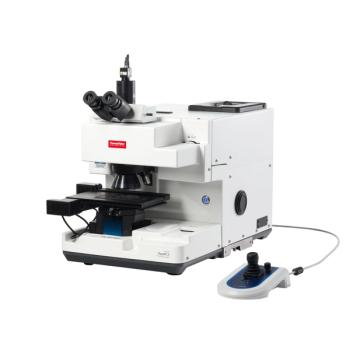
According to Thermo Fisher Scientific, their ARL X’TRA Pro diffractometer is designed for around-the-clock quantitative phase analysis of 50 to more than 100 samples per day.
In this Q&A, we explore some of the breakthroughs that have allowed spectrometers to be reduced in size while maintaining their effectiveness out in the field.
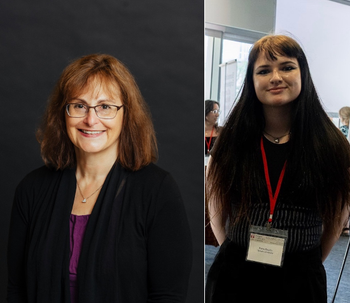
As part of our coverage of the SciX 2026 Conference, Nancy Pleshko and Petra Baylin of Temple University sat down with Spectroscopy to talk about their recent study, explaining how Fourier transform infrared (FT-IR) imaging of ultra-high weight molecular polyethylene (UHMWPE) implants permits oxidation evaluation throughout the sample yielding insight into failure.
A recent study explored using laser Brillouin spectroscopy to measure two key ocean parameters at once, a step toward remote profiling of the ocean's vertical structure.
The modular system is intended to help laboratories analyzing microplastics, pharmaceutical formulations, forensic evidence, and other microscopic samples.
In this clip from our SciX interview with Siddhartha Das, he describes his team’s “eureka moment”: the discovery that the ion distribution inside a polymer layer shapes how water moves under an electric field. He also explains why experimental confirmation is still years away.
SciX 2026, the annual conference presented by the Federation of Analytical Chemistry and Spectroscopy Societies (FACSS), ran October 4–9, 2026, at the Nugget Casino Resort in Sparks, Nevada. The program spanned atomic and molecular spectroscopy, mass spectrometry, chemometrics, and bioanalysis. This report follows the meeting day by day, from Monday's clinical Raman plenaries to Friday's closing talks, drawing on the online program and Spectroscopy coverage of award winners, highlighting efforts to move Raman, SERS, LIBS, and single-particle ICP-MS toward clinical, environmental, and field use.
At SciX, Alessandro De Giacomo explains how a 35-member international jury chose three papers: one on correct ICCD use and two applications using LIBS and LA-ICP-MS. He also explains what the selections say about the field.