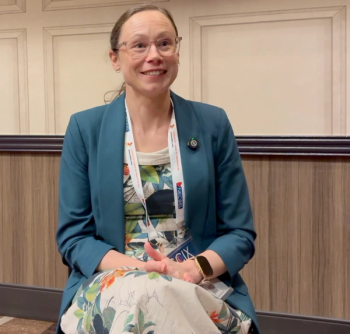
The recipient of the ACS Award in Spectrochemical Analysis discusses how surface-enhanced Raman scattering became a practical diagnostic readout and how close it is to clinical use.
At SciX 2026, Marc Porter explained why surface-enhanced Raman scattering can outperform fluorescence assays. He also described how a protein-denaturing step rescued his team’s tuberculosis test from a major loss in sensitivity.
In an interview at SciX, Marc Porter, a Distinguished Professor Emeritus in Chemistry and Chemical Engineering at the University of Utah, discussed how
Porter said that in many, though not all, cases his team has shown SERS outperforms other assay types on both limit of detection and analytical sensitivity, which he defined as the slope of the dose-response curve. That steeper response gives greater ability to discriminate between signal levels, he explained, allowing researchers to track changes in circulating biomarkers, such as those that rise or fall in early cancer, more quantitatively than they believe is possible with fluorescence-based methods.
He attributed much of that performance to sample preparation, but cautioned that the technique’s extreme sensitivity is a double-edged sword. Because SERS can measure analytes at levels that were out of reach until recent decades, every factor affecting sensitivity and reproducibility is amplified, and variables his team once overlooked became significant.
That lesson came into focus in the group’s tuberculosis work. Early experiments performed well in buffer, but detection capability dropped by three to four orders of magnitude once the assay moved into human serum, which was a classic sign of matrix interference.
Returning to the literature, the researchers found that complications with certain tuberculosis markers had been noted but never thoroughly investigated. Their solution was an acid-based pretreatment that denatures serum proteins, breaking up the immune complexes that bind the target marker. Freeing the marker in this way allowed it to be detected in the immunoassay’s capture and labeling steps.
Porter said this approach has been central to the group’s current capabilities, and the team is now working with a company in England to commercialize the test. He urged listeners to stay tuned.
(1) Porter, M.; Workman, J., Jr.; Wetzel, W. Marc Porter on SERS Immunoassays, Raman Labels, and a 95-mph Fastball. Spectroscopy Online, 2026.