SPEC PerkinElmer 11.10
|Articles|January 19, 2016

Analysis of Petroleum Samples by ICP-OES

Author(s)Manny Almeida

ICP-OES has been an important technique in the petroleum/petrochemical analysis laboratory due to its ability to determine a range of elements and concentrations in both aqueous and organic samples. This application note will demonstrate the ability of the Teledyne Leeman Labs Prodigy7 ICP-OES to determine a range of elements in petroleum samples.



Related to this article

Atoms Don't Lie–The Remaking of Atomic Spectroscopy, © Hallie -chronicles-stock.adobe.com
Atomic spectroscopy has quietly gone from counting elements in bulk to counting single nanoparticles, imaging tissue at the micrometer scale, and reading Martian rocks from several meters away. The instruments got smaller, the software got smarter, and the questions they can now answer got a lot more interesting.
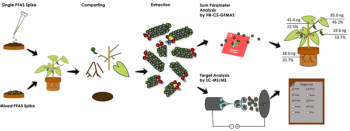
PFAS spiking experiments in bean plants (Phaseolus vulgaris)
Atomic Perspectives
This Atomic Perspectives column explains how high-resolution continuum source graphite furnace molecular absorption spectrometry (HR-CS-GFMAS) quantifies extractable organic fluorine (EOF) as a PFAS sum parameter, complementing LC-MS/MS target analysis, with applications to German river sediments, bean plants, and fluorinated polymer sealing materials.