News|Videos|June 19, 2026

Best of the Week: Prebiotic Chemistry, Real-Time Chemical Analysis, Previewing ISMS 2026

Author(s)Will Wetzel

Top articles published this week include a preview of the upcoming International Symposium on Molecular Spectroscopy (ISMS) conference, an inside look at particle correlated Raman spectroscopy, and more.

Particle-correlated Raman spectroscopy (PCRS) is being used in pharmaceutical nasal spray formulations, demonstrating it can be effective for chemical identification and real-world particulate characterization.1 We’ll talk about it here. Also, a recent video interview tackles how Raman spectroscopy is being applied in the oil and gas industry as a tool for real-time chemical analysis and process monitoring.2 And finally, the International Symposium on Molecular Spectroscopy (ISMS) conference takes place next week. We interviewed Miguel Sanz-Novo as part of our coverage, and we’ll share his insights here.3,4

This is the Best of the Week.

PCRS combines high-resolution optical imaging with Raman spectroscopy to link a particle's physical traits to its chemical makeup. Automated workflows identify particles, measure their shape, and capture Raman spectra, while specialized software ties it all together into a traceable, particle-level data set.1 Because the technique works across wet, dry, and semi-solid samples, it supports high-throughput, reproducible analysis on a wide range of materials. Its use in pharmaceutical nasal spray formulations shows just how effective it can be for real-world particulate characterization and chemical identification.1

Next, in the first part of a five-part interview series, Janam Pandya, a Product Manager at Thermo Fisher Scientific, talks about how Raman spectroscopy is gaining ground in the oil and gas industry as a tool for real-time chemical analysis and process monitoring. Pandya points to parts of the value chain still lacking real-time measurement capabilities and where Raman can make the biggest difference, drawing on his industry experience to highlight the technology's speed, non-destructive nature, and impact on efficiency, quality, and safety.2

With ISMS 2026 just a week away, we sat down with Miguel Sanz-Novo of the Max Planck Institute for Extraterrestrial Physics, who is this year's Miller Prize recipient. He shared insights into his research on complex organic and sulfur-bearing molecules in star-forming regions, and what they could mean for prebiotic chemistry and planet formation.3,4 He also previewed his upcoming Miller Prize lecture and offered advice for early-career researchers attending the conference, encouraging them to step outside their specialties, network actively, and put real effort into their presentations.3,4

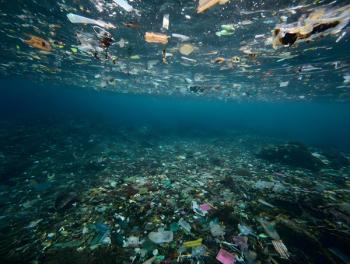
And finally, a new study found microplastics in sediments from Spain's UNESCO-protected Urdaibai Estuary, a reminder that protected status doesn't guarantee protection from plastic pollution.5

That's the Best of the Week.

References
  1. Sestak, M. Particle Correlated Raman Spectroscopy (PCRS): A Workflow for Correlating Particle Morphology with Chemical Identification. Spectroscopy 2026, 41 (3), 8–14. Available at: https://www.spectroscopyonline.com/view/particle-correlated-raman-spectroscopy-pcrs-a-workflow-for-correlating-particle-morphology-with-chemical-identification
  2. Pandya, J.; Wetzel, W. Where is Raman Spectroscopy Delivering the Most Value for Real-Time Chemical Analysis in Oil and Gas? Spectroscopy. Available at: https://www.spectroscopyonline.com/view/where-is-raman-spectroscopy-delivering-the-most-value-for-real-time-chemical-analysis-in-oil-and-gas- (Accessed June 17th, 2026).
  3. Sanz-Novo, M.; Wetzel, W. Understanding the Origins of Prebiotic Chemistry. Spectroscopy. Available at: https://www.spectroscopyonline.com/view/understanding-the-origins-of-prebiotic-chemistry (Accessed June 17th, 2026).
  4. Sanz-Novo, M.; Wetzel, W. Tips for Young Researchers Attending ISMS 2026 Next Week. Spectroscopy. Available at: https://www.spectroscopyonline.com/view/tips-for-young-researchers-attending-isms-2026-next-week (accessed June 18th, 2026).
  5. Wetzel, W. Microplastics Found in UNESCO-Protected Basque Estuary for First Time. Spectroscopy. Available at: https://www.spectroscopyonline.com/view/microplastics-found-in-unesco-protected-basque-estuary-for-first-time (Accessed June 17th, 2026).

Related to this article

Celebrating National Forensic Science Week
This interactive e-book celebrates National Forensic Science Week by highlighting the vital role of spectroscopy in modern criminal investigations and emphasizing how technological innovation is making forensic analysis faster, safer, and more reliable for courtroom testimony.
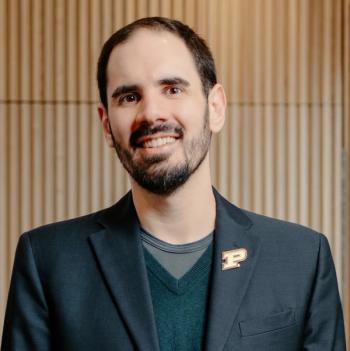
Brandon E. Boor is the Dr. Margery E. Hoffman Associate Professor in the Lyles School of Civil and Construction Engineering at Purdue University. | Photo Credit: © Brandon Boor.
In the second part of our interview with Brandon Boor of Purdue University, he discusses how his team controls experimental variables during cleaning experiments in order to obtain interpretable data.