In the second part of our interview with Brandon Boor of Purdue University, he discusses how his team controls experimental variables during cleaning experiments in order to obtain interpretable data.
Top articles published this week include an article on the upcoming SMASH 2024 Conference, a report on handheld near-infrared (NIR) spectrophotometers, and an inside look at the paprika and poultry industries.
This week, Spectroscopy published various articles that covered many topics in analytical spectroscopy. This week’s articles feature techniques including nuclear magnetic resonance (NMR), near-infrared (NIR) spectroscopy, and Fourier transform NIR (FT-NIR) spectroscopy. Below, we’ve highlighted some of the most popular articles, according to our readers and subscribers. Happy reading!
In September 2024, the SMASH 2024 Conference will take place at the Hotel Champlain Vermont in Burlington, Vermont. The conference will spotlight the latest nuclear magnetic resonance (NMR) methods and the newest applications in the field (1). In this conference preview, we dive deeply into the conference program, highlighting the oral sessions that will be taking place throughout the conference. We also make note of the several benefits that conference attendees gain access to by attending the conference.
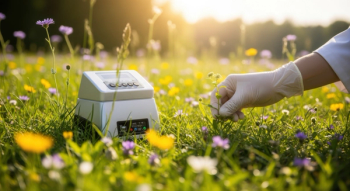
This article highlights a recent study published in Spectrochimica Acta Part A: Molecular and Biomolecular Spectroscopy. In this study, researchers from Brazil detailed the latest advancements in miniaturized near-infrared (NIR) spectrometers in forensic analysis (2). The article discusses the following topics: why there has been a rise of portable NIR spectrophotometers, the technological and analytical considerations that could hinder the widespread adoption of these devices, and how chemometrics is being used in conjunction with these spectrophotometers (2).
In part one of this two-part article, we investigate the current state of the poultry industry, and some of the challenges that the industry is currently facing. We then explore a recent study that used near-infrared (NIR) spectroscopy to predict the protein content in chicken (3). This article explains the importance of NIR spectroscopy in this industry and why it is the most optimal technique for this type of analysis.
In part one of this two-part article, we investigate the current state of the paprika industry and food analysis as a whole. We examine the importance of paprika to the global economy and why so many nations around the world covet paprika. This article first discusses what paprika is and its importance, before examining the global market for paprika and what the future holds for this commodity (4). Then, the article discusses a recent study conducted from researchers at the University of Murcia that saw them use Fourier transform NIR (FT-NIR) spectroscopy to evaluate the authenticity of paprika (4).
This article spotlights a current study conducted by researchers at Budapest University of Technology and Economics. In their study, the research team developed and proposed a novel method for monitoring the protein purification process using NIR and Raman spectroscopy. This news article details the researchers’ efforts in evaluating the effectiveness of NIR and Raman spectroscopy in tracking the removal of imidazole, which is a process-related impurity, during the purification of the SARS-CoV-2 spike protein's receptor-binding domain (RBD) (5).
(1) Wetzel, W. An Inside Look at the Upcoming SMASH Conference. Spectroscopy. Available at:
(2) Workman, Jr., J. Handheld NIR Spectrophotometers: Transforming Forensic Analysis with Portable Technology. Spectroscopy. Available at:
(3) Wetzel, W. Protein Prediction in Native Chickens Using Near-Infrared Spectroscopy, Part 1. Spectroscopy. Available at:
(4) Wetzel, W. New Breakthrough in Paprika Authentication: FT-NIR Analysis Ensures Quality and Detects Adulteration, Part 1. Spectroscopy. Available at:
(5) Workman, Jr., J. Real-Time Monitoring of Spike Protein Purification Using Raman and NIR Spectroscopy. Spectroscopy. Available at: