Register Now: Advances in Spectroscopy for Pharma and Biopharmaceutical Analysis Symposium
|Webcasts|June 29, 2021

Discover the Simple Way to Develop an ICP-OES Method

Tuesday, June 29, 2021 at 11am EDT | 8am PDT | 4pm BST | 5pm CEST

Register Free: http://www.spectroscopyonline.com/spec_w/trace_elements

Event Overview:

Analysis of samples by ICP-OES for trace elements has the potential to be complex, because both physical and spectral interferences can call into the question any results that are produced. A good approach to overcome these issues is to use a tried and tested method, one such being the US EPA Method 6010D (SW-846), which focuses on the analysis of solid wastes, soils, sediments, sludges, ground and surface waters, etc. As well as being used for its intended purpose to support the analysis of environmental samples, this method is also the ideal starting point for a range of different sample analyses. This webinar will explore this method further, including key steps in validation and adaptation to different sample matrix.

Key Learning Objectives:

  • Discover the features of US EPA Method 6010D (SW-846) that make it an ideal starting point for methods development
  • Find out how to apply key validation steps to ensure freedom from interferences
  • Understand how advanced ICP-OES instruments and software further aid method development and validation

Who Should Attend:

Anyone carrying out analysis by ICP-OES

Speakers

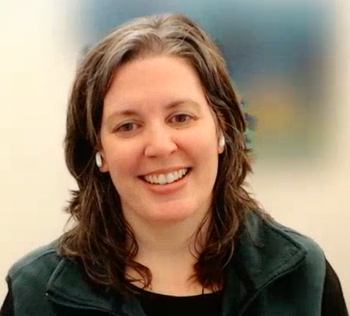
Sabrina Antonio
Regional Marketing Manager
Trace Elemental Analysis (AA, ICP-OES, and ICP-MS), North America

Sabrina Antonio has a degree in Chemical Engineering and a diverse professional background ranging from working in the energy industry as a Senior Chemical Engineer at Consolidated Edison of New York and Construction Project Manager for the New York Power Authority, to serving as a Chemist and Lead Inorganic Data Auditor for the US EPA Contract Laboratory Program, to work as a Product Specialist and Application Engineer for several engineering and manufacturing firms. She joined Thermo Fisher Scientific in 2015 as a Sales Specialist in the Center of Excellence and in 2018, became the Regional Marketing Manager for Trace Elemental Analysis in North America.

Matthew Cassap
Product Marketing Specialist
Trace Elemental Analysis

In 2006 Matthew Cassap joined Thermo Fisher Scientific as an applications specialist. In this role he become an expert in trace element analysis applications across a broad range of industry segments using a range of liquid and solid sampling accessories and hyphenated techniques. In 2012 Matthew assumed responsibility for the Thermo Scientific ICP-OES product line and is based at the manufacturing facility in Cambridge, UK. From 2014 to 2017 Matthew was based at the Thermo Scientific center of excellence in Bremen, Germany, as Product Manager for AA and ICP-OES. In 2018 Matthew relocated back to the UK and is now the TEA Product Marketing Specialist

Register Free: http://www.spectroscopyonline.com/spec_w/trace_elements


Related to this article

Spectroscopy Top 10 DOI Articles of the Month (October 2026)
The following articles are the most accessed digital object identifier (DOI) manuscripts for Spectroscopy and LCGC International during the month of October 2026. Nine articles are individually ranked here by DOI page views; the seventh-highest entry (99 views) was recorded against the bare LCGC North America journal-level DOI rather than an individual article and is therefore not attributable to a single manuscript.
Mapping Molecular Mobility Pixel by Pixel
Garth Simpson of Purdue University explains how patterned photobleaching and spatial Fourier transforms can turn a single-point measurement into a diffusion coefficient at every pixel in the field of view.
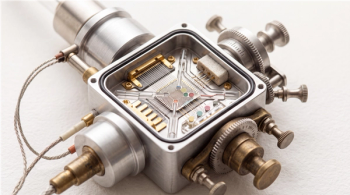
Optical and Electronic Instrument Components,  ©  ridwan -chronicles-stock.adobe.com
The updated and expanded 2026 edition of Spectroscopy's Instrument Components Terminology Guide defines the sources, detectors, optical and dispersive elements, sampling hardware, physical constants, and unit conversions used across UV-vis, NIR, IR, Raman, X-ray, and atomic spectroscopic instrumentation, with new terms reflecting component developments reported between 2022 and 2026.