Quality control and quality assurance during the lube oil blending and manufacturing process is essential. Basic lube oil formulations containing only P, S, Ca and Zn are often augmented with additional elements and additives to create lubricating oils for specific needs.. This report demonstrates the measurement of Mg, Si, P, S, Cl, Ca, Zn, Ba and Mo in new lube oils is using the empirical approach.
Spectroscopy's editors gather 143 evergreen articles from 2026, including tutorials, terminology guides, technique reviews, application surveys, peer-reviewed research and the magazine's long-running columns, and organize them by subject so readers can build lasting knowledge one topic at a time.
X-ray analytical techniques, spanning X-ray fluorescence (XRF), X-ray diffraction (XRD), and X-ray photoelectron spectroscopy (XPS), are becoming faster, more portable, and more energy-efficient, with microbeam XRF spot sizes once exclusive to synchrotrons now available on laboratory benchtops.
Top articles include the publication of a new terminology guide focused on data processing, machine learning, artificial intelligence (AI), and chemometrics.
Laser-induced breakdown spectroscopy (LIBS) is being used in numerous application areas, including environmental monitoring, cultural heritage, and space exploration.
The 2026 first edition of Spectroscopy's Chemometrics, Data Processing, Machine Learning, and Artificial Intelligence Terminology Guide defines the classical chemometric, statistical, machine learning, AI, and process analytical technology (PAT) terms most likely to be encountered by working spectroscopists, analytical chemists, and process engineers.
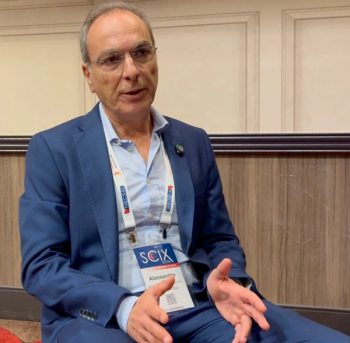
In an interview at SciX, Alessandro De Giacomo discusses nanoparticles as signal enhancers and medical tags, a self-calibrating drone LIBS system, open questions in laser–matter interaction, and why students need a strong foundation in fundamentals.
Top articles include an examination of the current trends propelling atomic spectroscopy forward and post-conference coverage of the 2026 SciX show in Sparks, Nevada.
Atomic spectroscopy has quietly gone from counting elements in bulk to counting single nanoparticles, imaging tissue at the micrometer scale, and reading Martian rocks from several meters away. The instruments got smaller, the software got smarter, and the questions they can now answer got a lot more interesting.