Explore Spectroscopy’s National Space Day eBook showcasing how
techniques like LIBS, Raman spectroscopy, and mass spectrometry are advancing
space exploration. This resource covers planetary missions, exoplanet research,
and the search for life beyond Earth through expert insights and featured articles.
From Mars and the Moon to distant galaxies, discover how spectroscopy
transforms light into scientific discovery. Gain a quick look at the technologies
shaping the future of space science.
In 2026, spectroscopy stopped behaving like a bench measurement and started acting like an intelligent, portable, and increasingly personal information system. Here is what Spectroscopy readers could not stop reading this year, and why 2027 may be the year these ideas leave the laboratory for good.
The updated and expanded 2026 edition of Spectroscopy's Instrument Components Terminology Guide defines the sources, detectors, optical and dispersive elements, sampling hardware, physical constants, and unit conversions used across UV-vis, NIR, IR, Raman, X-ray, and atomic spectroscopic instrumentation, with new terms reflecting component developments reported between 2022 and 2026.
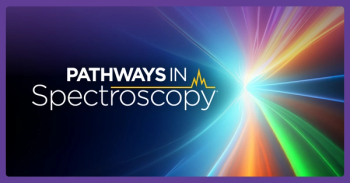
In this "Pathways in Spectroscopy" clip, Kevin Wilkinson explains why adaptability, critical evaluation of instruments, and data analysis skills matter more for graduate students than mastering any single technique.
Garth Simpson of Purdue University previews an upcoming chirality session at the Eastern Analytical Symposium and explains why the meeting’s blend of academic and industry researchers produces the most impactful science.
The Infrared and Raman Discussion Group’s 238th meeting on December 21 will feature the IRDG-Coblentz Lecture, two award presentations, and talks spanning clinical Raman, SERS, and ultrafast spectroscopy.
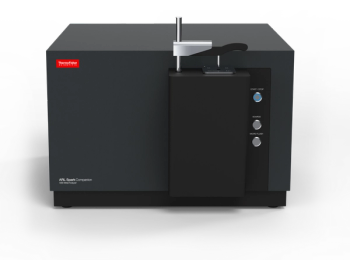
According to Thermo Fisher, the ARL Spark Companion pairs a multi-optics complementary metal-oxide-semiconductor (CMOS) detector with a compact spark source, aiming to move alloy verification out of external laboratories and closer to production.
Organized by CPACT, the April 27 to 29 meeting at the Marriott Pittsburgh City Center will bring together scientists, engineers, and vendors across the process industries, with keynotes on PAT, Raman, and NIR applications and an abstract deadline of December 7, 2026.