Recent Advancements in Portable and Handheld Spectroscopy
The lab is getting smaller and moving closer to where analysis is actually needed. In "Recent Advancements in Portable and Handheld Spectroscopy," we highlight the miniaturization of analytical equipment, detailing how traditional laboratory-bound instruments have evolved into portable and handheld spectroscopy devices. This exclusive eBook covers chip-scale Raman, field-ready NIR, and AI-assisted XRF, plus the real-world applications driving them.
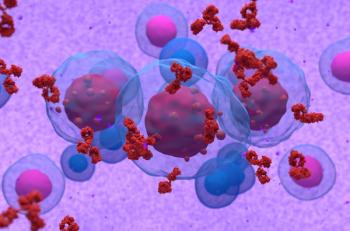
The expanded intended use takes the MALDI-TOF-based platform beyond aiding diagnosis to tracking monoclonal proteins over time in patients with multiple myeloma and Waldenström's macroglobulinemia.
Artificial intelligence (AI) has moved from a supporting role in molecular spectroscopy to the center of how spectra are interpreted. Between 2023 and 2026, machine learning models began proposing full molecular structures from routine NMR spectra, learning chemistry from millions of unlabeled mass spectra, predicting UV–vis absorption from structure alone, and steering workflows in autonomous laboratories. This review covers those advances, the push for explainable models, and what still limits routine adoption.
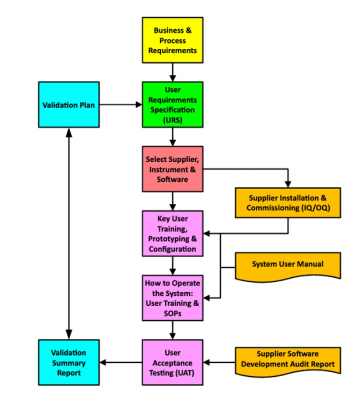
This "Focus on Quality" column completes a trilogy of columns starting with writing testable and verifiable user requirements and then leveraging a supplier’s software development into your validation.
Kevin Wilkinson explains why no single signature can identify particle sources, how faster instruments and software have shortened his lab’s data analysis from weeks to days, and why he tells students to “learn how to learn.”
Jürgen Popp of Leibniz-IPHT discusses what it takes to move biospectroscopy into hospitals, from regulation and cost targets to Raman-guided surgery and a future “personalized optical twin.”
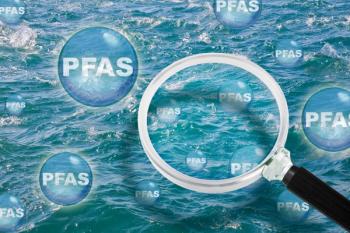
Inductively coupled plasma mass spectrometry (ICP-MS) and inductively coupled plasma optical emission spectrometry (ICP-OES) continue to push elemental analysis toward ever-finer resolution, from single-cell and single-nanoparticle measurements to fluorine-specific detection of per- and polyfluoroalkyl substance (PFAS) degradation products.