Advances in X-Ray Analysis: Techniques, Insights, and Applications
Advances in X-Ray Analysis: Techniques, Insights, and Applications brings together five years of coverage on XRF, XRD, XPS, TXRF, micro-XRF, and EDIXS. Explore how handheld XRF is transforming food safety screening, how multimodal X-ray techniques are preserving 26th-Dynasty Egyptian artifacts, what a Saharan meteorite reveals about aubrite mineralogy, and why AI-assisted spectral interpretation is becoming standard in next-gen instrumentation. Nine thematic sections. Two peer-reviewed features. One indispensable download for anyone working in X-ray spectroscopy.
UV-vis absorption spectroscopy, one of analytical chemistry's oldest and most accessible techniques, remains foundational to cutting-edge science, underpinning the Nobel Prize-winning discovery and synthesis of quantum dots and continuing to evolve through ultralow stray-light optics, chip-scale sensors, and AI-integrated process analyzers.
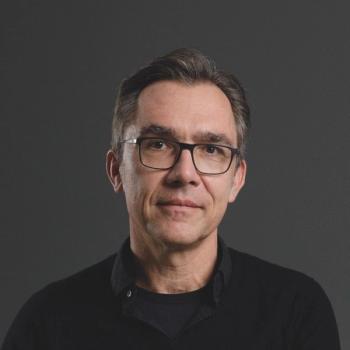
In this interview segment from SciX, Juergen Popp explains why molecular “twins” built from optical measurements could reach patients within a decade, provided the field builds the regulatory, computing, and standards ecosystem around the technology.
Siddhartha Das explains how machine learning helps his group sift through roughly a trillion simulation data points. It reveals water and electroosmotic flow behavior and could speed the design of sensor-like channels.
In his SciX interview, Marc Porter discusses what happens to hydrogen when thiols bind to gold, how close analytical chemists can get to detecting a single molecule in a liter, and his new PFAS-focused startup.
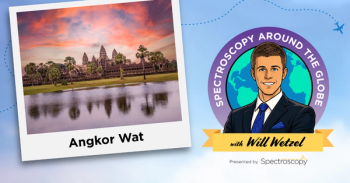
From quarry fingerprints to bat-driven salt damage and hidden wall paintings, portable X-ray fluorescence, Raman spectroscopy, and isotope analysis are revealing how Angkor Wat was built and what threatens it today.
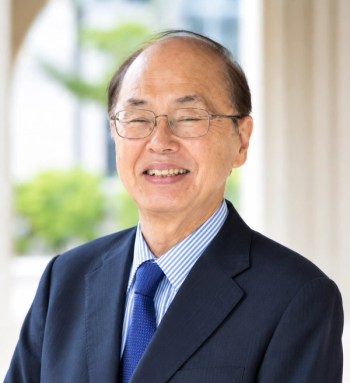
Yukihiro Ozaki of Kwansei Gakuin University received the Raman Lifetime Award at ICORS 2026 in Istanbul for outstanding lifetime contributions to Raman spectroscopy.