SPEC PerkinElmer 10.13
|Webcasts|May 16, 2023

Innovative AOX/TOX for Environmental Monitoring

Author(s)Analytik Jena

Webinar Date/Time: Thu, Jun 8, 2023 11:00 AM EDT

Are you analyzing organic halides in environmental samples or planning to do so? Join this webcast to learn about state-of-the-art instrumentation and different analytical techniques to maximize your lab’s performance.

Register Free: https://www.spectroscopyonline.com/spec_w/AOX/TOX

Event Overview:

This webcast will demonstrate and compare different techniques for the analysis of organic halides in diverse environmental samples with emphasis on the parameters AOX/TOX, EOX and TX. Various instrumental solutions, optimized for different usage scenarios, will be presented to provide current and future analysts with the knowledge required to make informed purchasing decisions and use their instruments efficiently. The award-winning APU28connect AOX sample adsorption system will be highlighted.

  • Horizontal vs. vertical combustion mode comparison
  • Flame-sensor optimized combustion of organic matrices
  • SPE-AOX for samples with high inorganic halide content
  • Flexible, high throughput sample prep with the AUP28connect

Key Learning Objectives:

  • Choosing the right analysis technique for your samples
  • Stay up to date on modern analyzer technology.
  • Increase your laboratory’s efficiency.

Who Should Attend:

  • Analysts and lab managers working in environmental analysis
  • Current users of halide analyzers
  • Decision makers planning to acquire a halide analyzer


Speaker:

Oliver Buettel
Product Manager
Analytik Jena US

Mr. Buettel started his career with Analytik Jena in 2006 as an application specialist for atomic spectroscopy at the headquarters in Jena, Germany. Since then, he has taken various roles in the spectroscopy department and in product management. In 2017, he moved to the United States to support the growth of the North American organization with his expertise. As the Product Manager of North America, he also manages the Analytik Jena US Application Lab in Houston, Texas.
Register Free: https://www.spectroscopyonline.com/spec_w/AOX/TOX


Related to this article

Infrared Reimagined: How FT-IR Spectroscopy Learned to Read Molecules, ©  Luis Eduardo  -chronicles-stock.adobe.com
FT-IR spectroscopy, long treated as a mature bench technique for confirming a carbonyl stretch or fingerprinting a polymer, has quietly become one of chemistry’s most versatile discovery engines: it now infers molecular structure straight from a spectrum without a reference library, resolves chemistry tens of nanometers wide, and screens a fingerstick of blood for disease in minutes. The last five years of published research show FT-IR moving from a confirmatory tool into a predictive, autonomous, and field-ready analytical platform.
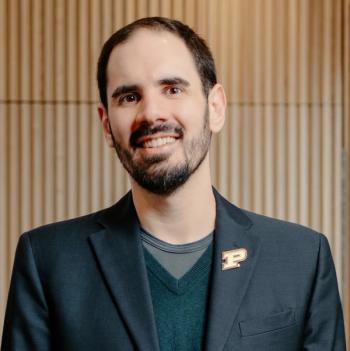
Brandon E. Boor is the Dr. Margery E. Hoffman Associate Professor in the Lyles School of Civil and Construction Engineering at Purdue University. | Photo Credit: © Brandon Boor.
In the second part of our interview with Brandon Boor of Purdue University, he discusses how his team controls experimental variables during cleaning experiments in order to obtain interpretable data.
Sizing Up the Nanoscale: Measuring Nanocluster Aerosol in Indoor Air
In the first part of a multi-part Q&A, Brandon Boor, the Dr. Margery E. Hoffman Associate Professor in the Lyles School of Civil and Construction Engineering at Purdue University, describes the instrumentation and methodology behind measuring nanoparticle size distributions at the nanocluster scale (1–3 nm) and outlines the technical challenges of acquiring reliable, real-time data at these dimensions.