In this interview clip, Kristin L. Wustholz of William & Mary explains how her group judges the fidelity of its blinking-based classifications, why real artworks will call for classification libraries, and where the method fits alongside SERS.
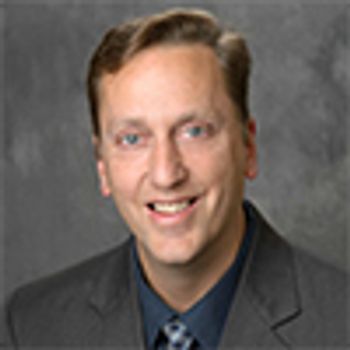
Spectroscopy magazine is pleased to announce the addition of Jim Rydzak to its editorial advisory board.
Spectroscopy magazine is pleased to announce the addition of Jim Rydzak to its editorial advisory board.
Rydzak is a practitioner of process analytical chemistry and chemometrics with experience primarily in active pharmaceutical ingredient development at GlaxoSmithKline (GSK), near Philadelphia, Pennsylvania, where he has worked for the past 12 years. He was a key person in starting the process analytical technology (PAT) group at GSK and Colgate-Palmolive. Rydzak was at Colgate-Palmolive for 16 years before joining GSK, first as a molecular spectroscopist. He then started the process analytical group in 1989, and later became a group leader and analytical and testing lab supervisor.
Rydzak’s background in Fourier-transform infrared (FT-IR), Raman, and near-infrared (NIR) spectroscopy led him into the process analytical field in the early 1980s. During his time at Colgate, he was a member of the Directors of Industrial Research Process Analytical roundtable. More recently, he was one of the founding members of the ASTM E55 committee on the “Manufacture of Pharmaceutical Products” and is a member of the ASTM E13 committee on “Analytical Instrumentation.”
Rydzak received his BS in Chemistry from Mount Union College in Alliance, Ohio, and his MS in Analytical Chemistry working for Peter Griffiths at Ohio University (Athens, Ohio). Rydzak taught short courses in molecular spectroscopy with for the Center for Professional Advancement for eight years in Amsterdam and New Jersey in the 1990s. He also has teamed with Chris Hassell to run the “Process Analytical Chemistry: Out of the Lab and into the Pipes” course on PAT at the Federation of Applied Chemistry and Spectroscopy Societies (FACSS) conference for several years.
Rydzak has been active on the FACSS governing board and has held the offices of governing board, program, long-range planning, site selection, and workshop and employment bureau chair positions in the FACSS organization since 1996. He also is active in the Coblentz Society (President elect 2012) and the Society of Applied Spectroscopy organizations and was active at the Eastern Analytical Symposium (EAS) as a Coblentz representative or alternate from 1999–2007.