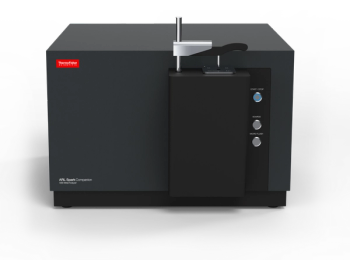
The main point the authors make is that NIR spectroscopy has several unique properties that distinguishes it from other analytical techniques. For example, NIR technology can analyze samples without destroying them (1). Second, the researchers explain that NIRS technology can be integrated with artificial intelligence (AI) and machine learning (ML). Because AI is only expected to grow exponentially over the years, this trend will only help make NIRS more valuable to food scientists.
The researchers also argue that the potential of NIR technology has not yet been fully realized. The authors argue that industries have struggled with the complexity of integrating NIR technology into process analytical technology (PAT) systems (1). As a result, many feasibility studies remain confined to laboratory settings with limited real-world application (1).
However, NIR technology can be optimized better in food production. The authors outline five ways that scientists can make this happen. First, it is integral that scientists select the right spectrometer type, because that is crucial to getting the data they need (1). Different food production environments require different specifications to ensure accuracy (1). Second, scientists need to learn how to better identify where NIR technology would be best suited and provide the most value (1). Third, improvements in sampling would ultimately benefit NIR technology, because it helps improve the quality of the data (1). Fourth, researchers need to continue finding new, innovative ways to use AI and ML (1). And finally, NIR integration with other systems, such as Supervisory Control and Data Acquisition (SCADA) systems, would help automate the data collection process (1).
For NIR technology to be fully realized as the technique of choice in food production, future studies need to focus in on a couple key items. The authors said that work needs to be done to make NIR technology smaller and more portable to increase its versatility (1). Doing this will also allow these instruments to be more cost-effective, which would incentivize more widescale adoption, because many laboratories cannot always afford the best and most expensive equipment. As a result, the increased affordability of these devices will allow small and medium-sized enterprises (SMEs) to implement this technology effectively (1).
The authors emphasize that although much of the academic research on NIR has been conducted in controlled laboratory settings, the technology must be scaled up to industrial applications (1). As a result, companies should look at developing response functions and automation processes that allow for seamless integration of NIR technology into production lines (1). Without this, the full benefits of NIR as a sustainable analytical tool may remain unrealized.
References
- Czaja, T. P.; Engelsen, S. B. Why Nothing Beats NIRS Technology: The Green Analytical Choice for the Future Sustainable Food Production. Spectrochimica Acta Part A: Mol. Biomol. Spectrosc. 2025, 325, 125028. DOI: 10.1016/j.saa.2024.125028
- Wright, D. D.; Zierden, M. R.; Kolomyjec, S.; Southwell, B. Applications of Micro X-Ray Fluorescence Spectroscopy in Food and Agricultural Products. Spectroscopy 2025, 40 (1), 8–15. Available at: https://www.spectroscopyonline.com/view/applications-of-micro-x-ray-fluorescence-spectroscopy-in-food-and-agricultural-products
- Xiaoyu, W.; Mingdong, Z.; Jie, L.; et al. Evaluation and Development Trends of Optical Detection Technology for Seed Vigor. Spectroscopy 2025, ASAP. DOI: 10.56530/spectroscopy.jf4177k4