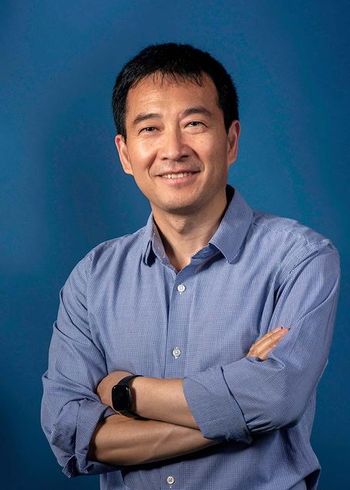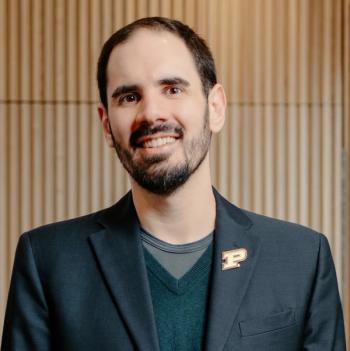
In the second part of our interview with Brandon Boor of Purdue University, he discusses how his team controls experimental variables during cleaning experiments in order to obtain interpretable data.
The 2010 Pittsburgh Conference Achievement Award will be presented to Joshua J. Coon, Assistant Professor of Chemistry and Biomolecular Chemistry at the University of Wisconsin-Madison (Madison, Wisconsin), on Monday morning at Pittcon 2010. The award is sponsored jointly by the Pittsburgh Conference and the Society for Analytical Chemists of Pittsburgh (SACP).
Monday, March 1, 2010
8:00 a.m. Room 300
The 2010 Pittsburgh Conference Achievement Award will be presented to Joshua J. Coon, Assistant Professor of Chemistry and Biomolecular Chemistry at the University of Wisconsin-Madison (Madison, Wisconsin), on Monday morning at Pittcon 2010. The award is sponsored jointly by the Pittsburgh Conference and the Society for Analytical Chemists of Pittsburgh (SACP). The award will be presented to Coon by Gregg Gould, Chairman of SACP. The award recognizes scientists who have made outstanding achievements within 10 years of the completion of their Ph.D. research. Coon will receive the award for his work in developing and applying new mass spectrometry–based proteomic technologies. The award presentation will be followed by a session of oral presentations on the development and application of novel technologies for large-scale protein sequence analysis.,/p>
Coon’s research group uses cutting-edge mass spectrometry approaches to study molecular events that cause human embryonic stemcells to exit the pluripotent state. The group determines which signaling pathways are active in the cells and which proteins or protein networks are phosphorylated upon differentiation. The new mass spectrometry technologies are focused on interpreting the epigenetic codes and monitoring how the messages change during cell differentiation.
Coon came to the University of Wisconsin-Madison in 2005. He holds patents on various mass spectrometry technologies and has authored more than 40 peer-reviewed scientific publications. He has received various awards, including the Beckman Young Investigator Award, the American Society for Mass Spectrometry Research Award, the NSF Career Award, the Eli Lilly and Co. Young Investigator Award, and the Ken Standing Award.