Register Now: Advances in Spectroscopy for Pharma and Biopharmaceutical Analysis Symposium
|Webcasts|May 24, 2022

Rapid, Statutory Determination of Cannabinoids in Hemp and Cannabis by A-TEEM Spectroscopy

Author(s)HORIBA

Tuesday May 24th 2022 2 pm EDT | 11 am PDT | 8 pm CET | 6 pm GMT Rapid spectroscopic analysis of cannabinoids in under a minute! Eliminate the high cost of consumables using A-TEEM as a substitute for chromatography.

Register Free: https://www.cannabissciencetech.com/cst_w/A-TEEM

Event Overview:

The ability to determine the statutory classification of cannabis rapidly and cost-effectively is critically important to the cannabis industry, from growers to formulators and manufacturers. THC content is the single piece of information that determines the legal status of a crop or finished product. The quantification of THC is most often obtained by HPLC, a slow and expensive method when compared to spectroscopy. At the same time, most spectroscopic methods – NIR, FT-IR, and Raman – struggle to meet these statutory limits, due to issues with sensitivity and specificity. In this webinar, we will present a better way to determine cannabinoids in hemp and cannabis, using a combination of UV absorbance-transmission and fluorescence excitation emission matrix spectroscopy, called “A-TEEM.” In particular, we will show that:

  • The simultaneous use of UV absorbance-transmission and fluorescence excitation emission matrix spectroscopy (A-TEEM) provides a sensitive, specific, reproducible, and repeatable method for the qualitative and quantitative characterization of cannabinoids in solution.
  • The limits of quantification (LOQs) of the A-TEEM method are comparable to those of HPLC, with high values of cross-validation and prediction for chemotype identification.
  • Using photons instead of physical separations for component identification, A-TEEM has the benefits that make spectroscopy so attractive for rapid screening: fast (<60 s) measurement times and low per measurement cost.

Key Learning Objectives:

  • Introduce the A-TEEM spectroscopic method, which combines UV-Vis absorbance with multidimensional fluorescence.
  • Highlight the unique attributes of A-TEEM for detection of low-level components in complex mixtures, specifically cannabinoids in simple methanol extracts.
  • Show the benefits of using A-TEEM as an alternative to HPLC for this analysis and other natural products.

Who Should Attend:

  • Analysts working in the cannabis industry or in cannabis research.
  • Pharma/biopharma QA/QC laboratory analysts and laboratory managers.
  • Food industry laboratory analysts and laboratory managers.
  • Academics engaged in food, pharmaceutical, and natural products characterization.

Speakers

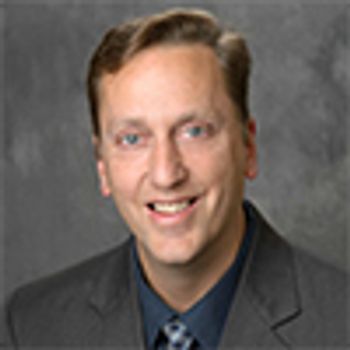
Adam M. Gilmore
Aqualog Product Manager
Horiba Instruments Inc.

Adam Gilmore, received his Ph.D. in 1992 from the University of Hawai’i at Manoa (UH Manoa) in the Dept. of Plant Molecular Physiology, and has over 29 years of experience in the field of optical spectroscopy. He has developed and patented application-specific instruments and software methods for HORIBA Inc.’s line of absorbance-transmittance fluorescence excitation-emission matrix (A-TEEM) spectroscopy products utilized in pharma, life sciences, water treatment monitoring, and a variety of other industries.

Register Free: https://www.cannabissciencetech.com/cst_w/A-TEEM


Related to this article

A robotic arm in an automated agricultural setting, carefully processing a conveyer belt with tomatoes and leafy greens for food production. | Image Credit: © Donnangelo - stock.adobe.com
Croatian researchers outline how optical emission spectroscopy (OES) can track reactive species and plasma parameters in real time, giving processors a path to move cold plasma treatments from the laboratory to production lines.
Spectroscopy Top 10 DOI Articles of the Month (October 2026)
The following articles are the most accessed digital object identifier (DOI) manuscripts for Spectroscopy and LCGC International during the month of October 2026. Nine articles are individually ranked here by DOI page views; the seventh-highest entry (99 views) was recorded against the bare LCGC North America journal-level DOI rather than an individual article and is therefore not attributable to a single manuscript.
Mapping Molecular Mobility Pixel by Pixel
Garth Simpson of Purdue University explains how patterned photobleaching and spatial Fourier transforms can turn a single-point measurement into a diffusion coefficient at every pixel in the field of view.
Optical and Electronic Instrument Components,  ©  ridwan -chronicles-stock.adobe.com
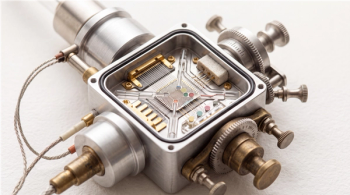
The updated and expanded 2026 edition of Spectroscopy's Instrument Components Terminology Guide defines the sources, detectors, optical and dispersive elements, sampling hardware, physical constants, and unit conversions used across UV-vis, NIR, IR, Raman, X-ray, and atomic spectroscopic instrumentation, with new terms reflecting component developments reported between 2022 and 2026.