Accurate fluorine determination in organic matrices like polymers, fuels, and oils remains one of analytical chemistry's most persistent challenges. In this Dedicated Dialogue, Holger Sievers, PhD, Product Manager of Atomic Absorption Spectrometry at Analytik Jena, explains why conventional techniques fall short and introduces a novel approach that combines pyrohydrolytic combustion with high-resolution continuum source molecular absorption spectrometry. This method delivers faster, more sensitive, and more reliable fluorine measurement across a range of industries.
Understand why fluorine is uniquely difficult to measure using conventional techniques.
Learn how pyrohydrolytic combustion converts organically bound fluorine into a measurable inorganic form.
Discover the industries and applications that benefit most from this combined analytical approach from pyrolytic oil to environmental analysis.
At SciX, Juergen Popp explains why a new infection test must fit hospital workflows, outperform the gold standard, and cost about a euro or less per test. He also describes a host-response test that could change how emergency departments treat suspected sepsis.
Jay Kitt of the University of Utah explains that his group’s platform for quantitative Raman measurements inside chromatographic particles didn’t come from a search for signal enhancement. It grew out of a decade of chromatography and biochemistry research.
In this segment of his SciX interview, Marc Porter explains why every step matters when measuring at picomolar and femtomolar levels, and how switching to proteinase K helped make his group’s tuberculosis work more clinic-ready.
In this clip from our SciX interview with Siddhartha Das, he describes his team’s “eureka moment”: the discovery that the ion distribution inside a polymer layer shapes how water moves under an electric field. He also explains why experimental confirmation is still years away.
SciX 2026, the annual conference presented by the Federation of Analytical Chemistry and Spectroscopy Societies (FACSS), ran October 4–9, 2026, at the Nugget Casino Resort in Sparks, Nevada. The program spanned atomic and molecular spectroscopy, mass spectrometry, chemometrics, and bioanalysis. This report follows the meeting day by day, from Monday's clinical Raman plenaries to Friday's closing talks, drawing on the online program and Spectroscopy coverage of award winners, highlighting efforts to move Raman, SERS, LIBS, and single-particle ICP-MS toward clinical, environmental, and field use.
According to Thermo Fisher Scientific, their ARL X’TRA Pro diffractometer is designed for around-the-clock quantitative phase analysis of 50 to more than 100 samples per day.
At SciX, Alessandro De Giacomo explains how a 35-member international jury chose three papers: one on correct ICCD use and two applications using LIBS and LA-ICP-MS. He also explains what the selections say about the field.
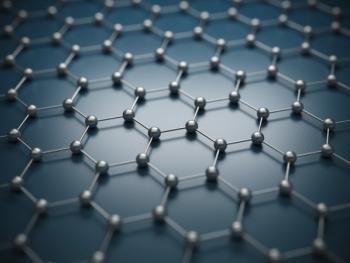
At SciX 2026, Siddhartha Das explains how graphene can be used to show how atom-level interactions between ions and water decide what passes through a membrane and what stays behind.