An upcoming talk at the SciX Conference will explore the concept of electroosmosis, and how machine learning (ML) can be used to understand electroosmotic flow behavior.
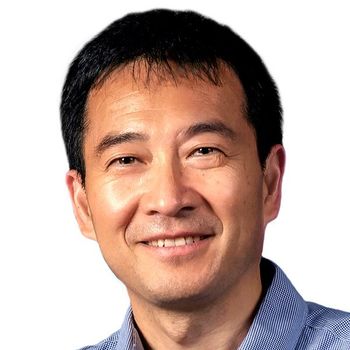
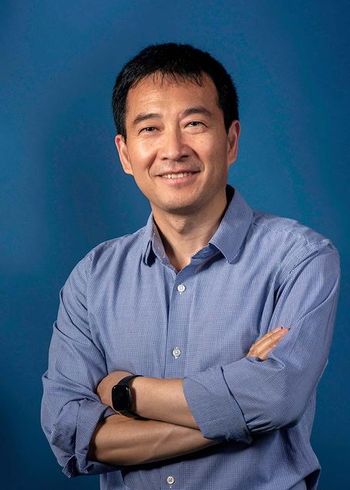
Rohit Bhargava, the Founder Professor of Bioengineering and a Professor of Chemistry at the University of Illinois Urbana-Champaign, is the 2022 winner of the Pittsburgh Spectroscopy Award. He will receive the award during a virtual session at Pittcon 2022 on Monday, March 14, that starts at 1:00 pm EST. The Pittsburgh Spectroscopy Award, established in 1957, is given annually to a researcher who has demonstrated outstanding achievements in the field of spectroscopy.
The choice of Bhargava for this award was based on his fundamental contribution in the application of chemical imaging to diagnose cancer and macroscopic structures. He is the founder of The Cancer Center at Illinois, the first technology-focused cancer research in the United States.
During the award session, Bhargava will present a talk titled “Infrared Chemical Imaging: Advancing Measurement Technology to Enable Improved Cancer Pathology.”
Widely recognized for research on chemical imaging with key advances in theory, instrumentation, and applications of this technology, Bhargava is using artificial intelligence techniques with IR imaging. His recent work is focused on understanding and using the native molecular content of the tumor and its microenvironment for improved cancer pathology.
To register for the awards session, go to: