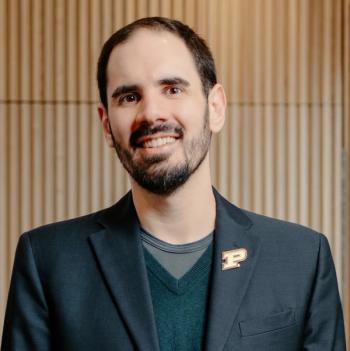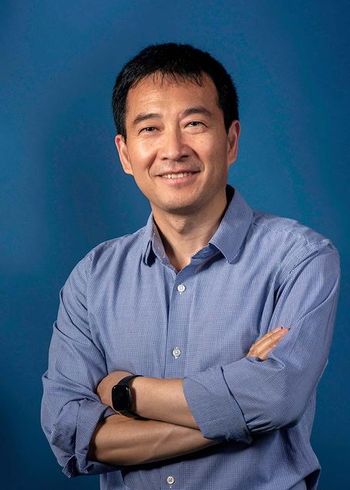
An upcoming talk at the SciX Conference will explore the concept of electroosmosis, and how machine learning (ML) can be used to understand electroosmotic flow behavior.
At the SciX Conference in Sparks, Nevada, Spectroscopy magazine sat down with Mathew Horrocks of the University of Edinburgh to discuss his research developing and using single-molecule and super-resolution microscopy techniques to study amyloid oligomers and their commonality regarding a variety of neurodegenerative disorders.
Mathew Horrocks studied Chemistry at Oriel College at the University of Oxford. He did his master’s project with Professor Mark Wallace, where he was first introduced to single-molecule techniques. He moved to the University of Edinburgh in 2018 to take up a post as a Lecturer (Assistant Professor) in the School of Chemistry, where he also established the ESMB Group. He was promoted to Senior Lecturer (Associate Professor) in 2022, and he currently leads a team of 13 researchers dedicated to the advancement and application of single-molecule and super-resolution techniques. Horrocks and his team are focused on unraveling various biological questions, encompassing subjects such as the molecular underpinnings of memory storage, how proteins misfold, and the mechanisms behind mitochondrial dysfunction in cardiovascular diseases.
In this interview segment, Horrocks answers the following question:
This interview segment is one of several conducted in conjunction to the SciX 2023 conference. You can see our latest conference coverage, including our additional video interviews conducted at SciX, at the following link: