
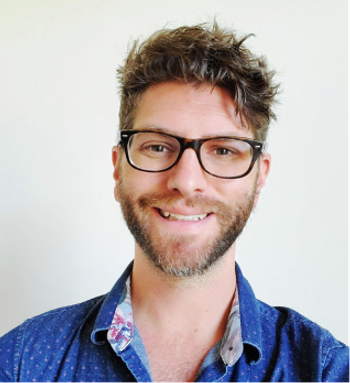
At SciX, Jay Kitt discusses a project applying Raman spectroscopy to PFAS analysis, the mentoring role he found after leaving traditional academia, and why machine learning could unlock the biochemical information in vibrational spectra.
At SciX, Jay Kitt discusses a project applying Raman spectroscopy to PFAS analysis, the mentoring role he found after leaving traditional academia, and why machine learning could unlock the biochemical information in vibrational spectra.

In this interview segment from SciX, Juergen Popp explains why molecular “twins” built from optical measurements could reach patients within a decade, provided the field builds the regulatory, computing, and standards ecosystem around the technology.

Siddhartha Das explains how machine learning helps his group sift through roughly a trillion simulation data points. It reveals water and electroosmotic flow behavior and could speed the design of sensor-like channels.

In his SciX interview, Marc Porter discusses what happens to hydrogen when thiols bind to gold, how close analytical chemists can get to detecting a single molecule in a liter, and his new PFAS-focused startup.
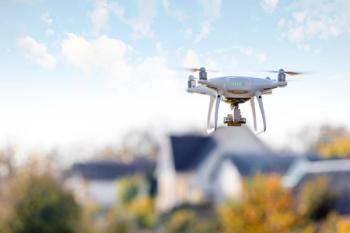
At SciX, Alessandro De Giacomo explained how airborne LIBS can produce quantitative results. Instead of relying on reference measurements, the method draws calibration directly from the measured signal, which sidesteps the drone’s positioning and motion problems.
At SciX, Jürgen Popp explains how miniaturized optical spectroscopy could add molecular data to wearable health tracking, which could enable earlier disease detection and a shift toward prevention.
At SciX, Jay Kitt describes the experiment he ran on his own that launched his cytochrome c research, and explains why putting a number on peptide–lipid interactions matters.

Jürgen Popp explains how head and neck surgeons in Jena use a Raman probe to locate tumor borders, why the technique could replace frozen section biopsies, and why optical tools must adapt to clinical workflows rather than the other way around.

At SciX, Marc Porter explains how a Thanksgiving batting lesson led him to compare a bat meeting a ball to light scattering off a molecule, and how his group is using simulations to test whether the analogy holds.

Alessandro De Giacomo argues that grounding students in scientific fundamentals, rather than rushing them toward applications, is what makes breakthrough ideas possible.

Top content published this week includes coverage from the 2026 SciX Conference, which took place in Sparks, Nevada, from October 4–9.

In this SciX interview segment, Siddhartha Das explains how his group’s simulations revealed a nanochannel scenario that produces energy and boosts flow at the same time. This overturns the classical electroviscous trade-off without breaking the laws of thermodynamics.
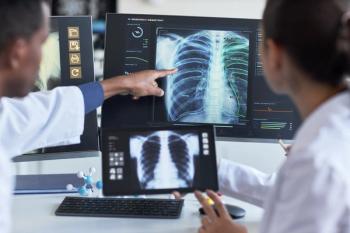
At SciX, Juergen Popp explains why a new infection test must fit hospital workflows, outperform the gold standard, and cost about a euro or less per test. He also describes a host-response test that could change how emergency departments treat suspected sepsis.
Jay Kitt of the University of Utah explains that his group’s platform for quantitative Raman measurements inside chromatographic particles didn’t come from a search for signal enhancement. It grew out of a decade of chromatography and biochemistry research.
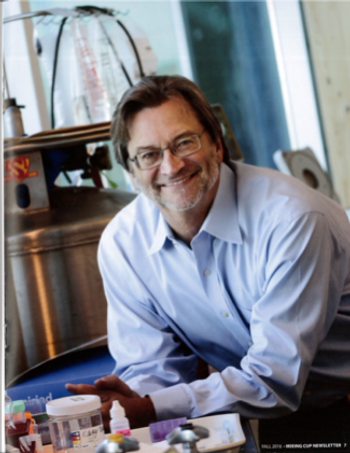
In this segment of his SciX interview, Marc Porter explains why every step matters when measuring at picomolar and femtomolar levels, and how switching to proteinase K helped make his group’s tuberculosis work more clinic-ready.

In this clip from our SciX interview with Siddhartha Das, he describes his team’s “eureka moment”: the discovery that the ion distribution inside a polymer layer shapes how water moves under an electric field. He also explains why experimental confirmation is still years away.

At SciX, Alessandro De Giacomo explains how a 35-member international jury chose three papers: one on correct ICCD use and two applications using LIBS and LA-ICP-MS. He also explains what the selections say about the field.
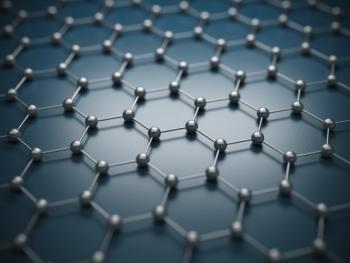
At SciX 2026, Siddhartha Das explains how graphene can be used to show how atom-level interactions between ions and water decide what passes through a membrane and what stays behind.
At SciX 2026, Marc Porter explained why surface-enhanced Raman scattering can outperform fluorescence assays. He also described how a protein-denaturing step rescued his team’s tuberculosis test from a major loss in sensitivity.
At SciX 2026, Alessandro De Giacomo explains why laser–matter interaction deserves more attention and how nanoparticle size forces a trade-off between sensitivity and practical tagging.
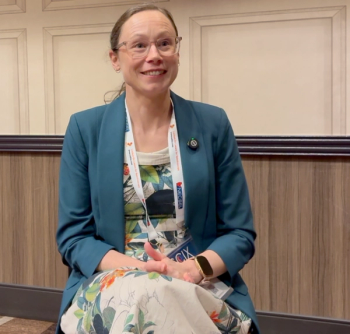
The inaugural Peter Griffiths Award winner discusses deep low-frequency Raman measurements through wax and what remains before clinical breast-imaging use.
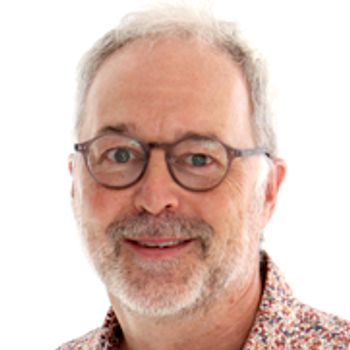
The 2026 Lester W. Strock Award recipient discusses how single-particle ICP-MS can distinguish engineered and natural nanoparticles and track metalloid pollution downwind of industrial sites.
The recipient of the ACS Award in Spectrochemical Analysis discusses how surface-enhanced Raman scattering became a practical diagnostic readout and how close it is to clinical use.
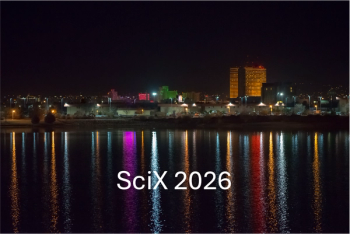
A candid plenary on the incentives shaping academic science was followed by an afternoon of talks spanning flowing SERS detection, historical textiles, maple syrup, pathogen immunoassays, and electrochemical Raman microscopy.
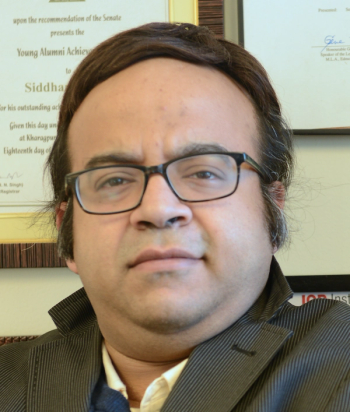
The 2026 AES Mid-Career Award recipient explains how molecular-scale simulations of polyelectrolyte brush-grafted nanochannels are revealing unexpected flow behavior.
The 2026 Ellis R. Lippincott Award recipient discusses the barriers to clinical adoption of photonic diagnostics and his vision for personalized optical digital twins.
The University of Utah researcher discusses surface-area-enhanced Raman spectroscopy, lipid membrane studies, and his move into PFAS testing.
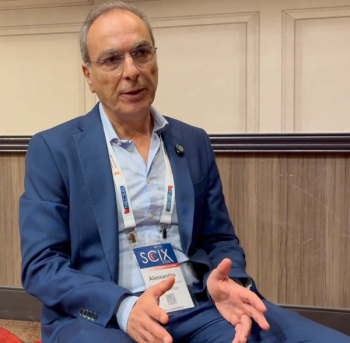
Honored with a dedicated Spectrochimica Acta Part B award session at SciX 2026, De Giacomo explains why larger nanoparticles produce stronger LIBS signals and what that means for sensing design.

Wednesday's program at SciX 2026 kept returning to one question: can spectroscopy perform outside the controlled laboratory? Speakers took surface-enhanced Raman scattering (SERS), laser-induced breakdown spectroscopy (LIBS), mid-infrared photonics, chemometrics, and fluorescence excitation–emission matrix (EEM) spectroscopy into clinics, food plants, reactor coolant loops, brine fields, and drinking water supplies.
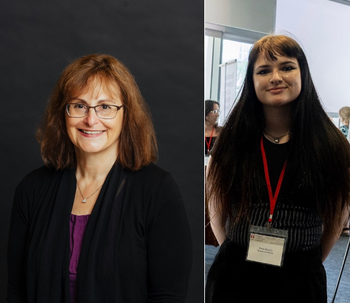
As part of our coverage of the SciX 2026 Conference, Nancy Pleshko and Petra Baylin of Temple University sat down with Spectroscopy to talk about their recent study, explaining how Fourier transform infrared (FT-IR) imaging of ultra-high weight molecular polyethylene (UHMWPE) implants permits oxidation evaluation throughout the sample yielding insight into failure.