SPEC PerkinElmer 10.13
|Articles|April 18, 2017

Spectroscopy Announces the Winner of the 2017 Emerging Leader in Molecular Spectroscopy Award

Russ Algar, an assistant professor in chemistry at the University of British Columbia (UBC), in Vancouver, Canada, has won the 2017 Emerging Leader in Molecular Spectroscopy Award, which is presented by Spectroscopy magazine.

Russ Algar, an assistant professor of chemistry at the University of British Columbia (UBC), in Vancouver, Canada, has won the 2017 Emerging Leader in Molecular Spectroscopy Award, which is presented by Spectroscopy magazine. This annual award recognizes the achievements and aspirations of a talented young molecular spectroscopist, selected by an independent scientific committee. The award will be presented to Algar at the SciX 2017 conference in October, where he will give a plenary lecture and be honored in an award symposium.

Algar received his PhD in 2010 from the University of Toronto in Canada. He then spent two years as a postdoctoral researcher at the Centre for Bio/Molecular Science Engineering at the U.S. Naval Research Laboratory, in Washington, D.C., before moving to UBC as a Canada Research Chair (Tier 2) in bio/chemical sensing. He has since been honored as a Michael Smith Foundation for Health Research Scholar, a 2017 Alfred P. Sloan Foundation Research Fellow in chemistry, and the 2017 winner of the Fred Beamish Award in analytical chemistry from the Canadian Society for Chemistry, among other recognitions. He serves on the editorial boards of the journals Chemosensors, Analytical Chemistry Research, and Nano Reviews & Experiments, and has been a peer reviewer for more than 60 scientific journals. 

At UBC, Algar leads a research group that focus on the development, spectroscopy, and applications of nontraditional fluorescent materials for bioanalysis. Examples of these materials include quantum dots, luminescent lanthanide complexes, and semiconducting polymer dots. Areas of special interest include new strategies and devices for point-of-care diagnostics with smartphones and other portable and mass-produced consumer electronics; the development of multifunctional fluorescent probes toward studying cascaded cell signaling processes; photonic logic; novel Förster resonance energy transfer configurations; understanding and controlling the interfacial interactions between nanoparticles and biological molecules; and the development of new materials and chemistries to support the foregoing research. Algar and his coworkers have authored more than 80 indexed publications that have accrued more than 2800 citations, 11 book chapters, and co-edited a book.

In addition to his research program, Algar is an enthusiast for innovation in chemical education. He has published multiple papers in the Journal of Chemical Education, has led pedagogical research and development projects at UBC, is a co-organizer for the “Teaching Analytical Chemistry” symposium at the annual Canadian Society for Chemistry Conference, and is a member of the board of directors for the Chemical Institute of Canada Chemical Education Fund.

For information about how to nominate a candidate for the 2018 award, please see the call for nominations.

Related to this article

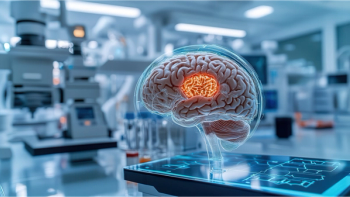
NIR Spectroscopy of the Brain and Other Complex Analyses, ©   Navaporn  -chronicles-stock.adobe.com
Near-infrared spectroscopy has quietly stopped being a niche calibration exercise and started acting like an autonomous diagnostic partner, reading consciousness in an injured brain, steering a fermenter without a human hand, and hunting invisible plastic in a glass of water. The tool chemists once used to check moisture in grain is now fusing with artificial intelligence to make decisions no spectrometer could make alone.
FACSS 2026 Award Interviews ©  Erin -chronicles-stock.adobe.com
Eight FACSS award winners at SciX 2026, One LIBS trailblazer. Forty-eight questions. And not one of them is a softball. Award season in spectroscopy usually means polite applause, a plaque, and a photo. We're not completely interested only in the award sessions. The eight scientists honored at SciX 2026 in Sparks, Nevada, along with LIBS researcher Alessandro De Giacomo, are pushing Raman into operating rooms, flying LIBS on drones, reading chemistry off Mars, and tracing toxic metals downwind of industrial sites. Their work makes big claims. In the coming days, Spectroscopy will sit down with eight of these researchers and ask whether those claims hold up. The interviews that follow won't just celebrate. They'll press on the gaps between simulation and experiment, between the lab bench and the clinic, and between a clever paper and an instrument someone will actually buy and use.
Spectral Frontiers: Past the Diffraction Limit (FT-IR Spectroscopy)
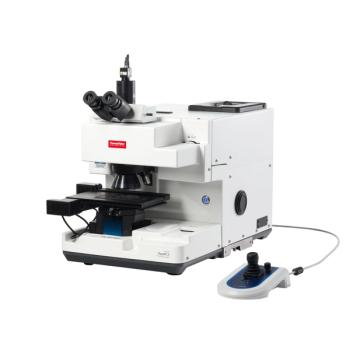
Fourier-transform infrared (FT-IR) spectroscopy, long the workhorse of molecular fingerprinting, is being reinvented by photothermal detection schemes and quantum cascade laser (QCL) sources that push spatial resolution and analysis speed far beyond classical dispersive and interferometric limits. New instrumentation such as optical photothermal infrared (O-PTIR) microscopy and laser direct infrared (LDIR) chemical imaging is enabling sub-micron, label-free chemical mapping of biological, environmental, and pharmaceutical samples. This article reviews the latest FT-IR-adjacent technologies, recent patents, and research driving the field, featuring perspectives from the scientists and instrument developers advancing the technique.