Register Now: Advances in Spectroscopy for Pharma and Biopharmaceutical Analysis Symposium
|Webcasts|April 6, 2022

TERS and TEPL Imaging for 2D Materials Research

Author(s)HORIBA

Wednesday, April 6th 2022 at 2 pm EDT | 11 am PDT | 7 pm GMT New exciting results on TERS nanoscale spectroscopic characterization of 2D materials and their lateral and vertical heterostructures will be presented.

Register Free: https://www.spectroscopyonline.com/spec_w/TERS_TEPL

Event Overview:

It would not be too much of exaggeration to state that Physics and Materials Science research of the first half of the 21-st century is being shaped by the amazing discoveries of 2D materials such as graphene, transition metal dichalcogenides (TMDs), black phosphorous and their heterostructures, both vertical and lateral. Raman spectroscopy and hyperspectral Raman imaging is extremely efficient for characterization of 2D materials. Quite often, the scale of structural or electronic or morphological heterogeneity in these materials, not to mention their heterostructures, is on the order of few tens of nanometers or less, which is beyond the spatial resolution of conventional Raman microscopy.

Tip enhanced Raman scattering (TERS) and tip enhanced photoluminescence (TEPL) can enhance the spatial resolution. In this lecture we’ll -

  • Demonstrate how TERS and TEPL imaging can probe a number of nanoscale heterogeneities in 2D crystals: growth related, including lateral and vertical heterostructures, substrate induced, and the morphological heterogeneities that appear (intentionally or not) in the process of exfoliation/ 2D crystal transfer.
  • Discuss the latest results on ultra-low frequency TERS imaging of homo- and heterobilayers of TMDs

Key Learning Objectives:

  • Introduction to tip enhanced Raman scattering (TERS) imaging
  • Application of TERS and TEPL imaging to characterization of defects and heterogeneities in 2D materials
  • TERS Imaging for nanoscale spectroscopic characterization of lateral and vertical heterostructures of 2D materials

Who Should Attend:

  • Material scientists, Ph.D. students, post-docs in chemistry, materials, engineering, quantum materials

For any questions please contact Preranna Singh: psingh@mjhlifesciences.com

Speakers

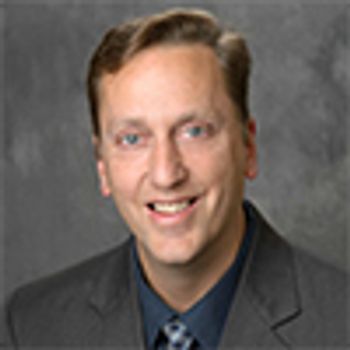
Andrey Krayev
AFM-Raman Product Manager
HORIBA Scientific

Andrey Krayev received his graduate degree from the Moscow Institute of Physics and Technology in 1991. In 2001 he started to use SPM while working as an application scientist for QPT Inc. Since 2008 he has been the CTO of AIST-NT Inc. He is actively involved in the development of the TERS technique and its implementation for advanced characterization of modern materials. Following the acquisition of AIST-NT technology by Horiba in 2017, Andrey holds the position of the North America AFM-Raman manager for Horiba Scientific. He continues active development of TERS-related applications for advanced characterization of 2D materials and beyond. Results of his collaborative research with leading groups in the US and worldwide are being published in high visibility journals like Nature, Nano Letters, and 2D Materials.

Register Free:https://www.spectroscopyonline.com/spec_w/TERS_TEPL


Related to this article

A robotic arm in an automated agricultural setting, carefully processing a conveyer belt with tomatoes and leafy greens for food production. | Image Credit: © Donnangelo - stock.adobe.com
Croatian researchers outline how optical emission spectroscopy (OES) can track reactive species and plasma parameters in real time, giving processors a path to move cold plasma treatments from the laboratory to production lines.
Spectroscopy Top 10 DOI Articles of the Month (October 2026)
The following articles are the most accessed digital object identifier (DOI) manuscripts for Spectroscopy and LCGC International during the month of October 2026. Nine articles are individually ranked here by DOI page views; the seventh-highest entry (99 views) was recorded against the bare LCGC North America journal-level DOI rather than an individual article and is therefore not attributable to a single manuscript.
Mapping Molecular Mobility Pixel by Pixel
Garth Simpson of Purdue University explains how patterned photobleaching and spatial Fourier transforms can turn a single-point measurement into a diffusion coefficient at every pixel in the field of view.
Optical and Electronic Instrument Components,  ©  ridwan -chronicles-stock.adobe.com
The updated and expanded 2026 edition of Spectroscopy's Instrument Components Terminology Guide defines the sources, detectors, optical and dispersive elements, sampling hardware, physical constants, and unit conversions used across UV-vis, NIR, IR, Raman, X-ray, and atomic spectroscopic instrumentation, with new terms reflecting component developments reported between 2022 and 2026.