SPEC PerkinElmer 10.13
Commentary|Videos|January 23, 2024

The Burgener Nebulizer and Burgener Research: An Interview with John Burgener

Author(s)Will Wetzel

At the Winter Conference on Plasma Spectrochemistry, Spectroscopy magazine sat down with John Burgener of Burgener Research Inc. to discuss his career working with mass spectrometers, inductively coupled plasma (ICP), and developing the Burgener nebulizer.

In part 1 of our interview, Burgener discussed the origins of Burgener Research and his experience working with inductively coupled plasma (ICP) instrumentation. Part 2 of our interview with Burgener focused on discussing careers in ICP, and he offered a couple important tips to young people just starting a career in ICP and spectroscopy.

In the final part of our conversation with Burgener, he answers the following questions:

  • What would you consider to be the greatest achievement in your career? What did you accomplish that you are most proud of? (00:16–02:43)
  • Can you talk about Burgener Research’s Mira Mist and the new nebulizers you are showcasing at the Winter Conference? (02:44–05:17)

Related to this article

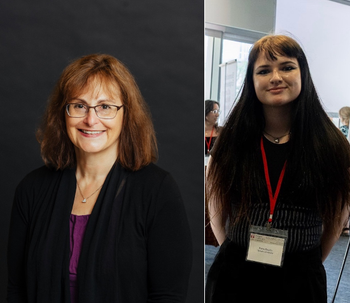
Nancy Pleshko (left) is a Laura H. Carnell Professor Emerita in Temple University's Department of Bioengineering. Petra A. Baylin (right) is a research assistant in the Tissue Imaging and Spectroscopy Lab at Temple University. Photo Credits: © Nancy Pleshko and Petra Baylin
As part of our coverage of the SciX 2026 Conference, Nancy Pleshko and Petra Baylin of Temple University sat down with Spectroscopy to talk about their recent study, explaining how Fourier transform infrared (FT-IR) imaging of ultra-high weight molecular polyethylene (UHMWPE) implants permits oxidation evaluation throughout the sample yielding insight into failure.
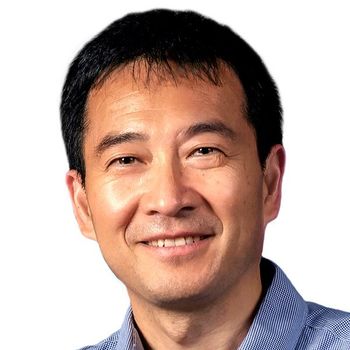
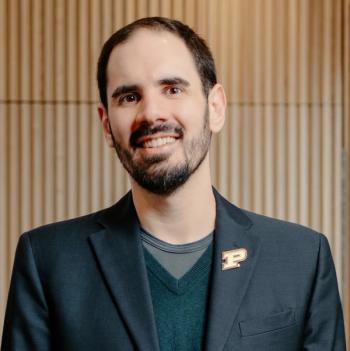
Brandon E. Boor is the Dr. Margery E. Hoffman Associate Professor in the Lyles School of Civil and Construction Engineering at Purdue University. | Photo Credit: © Brandon Boor.
In the second part of our interview with Brandon Boor of Purdue University, he discusses how his team controls experimental variables during cleaning experiments in order to obtain interpretable data.
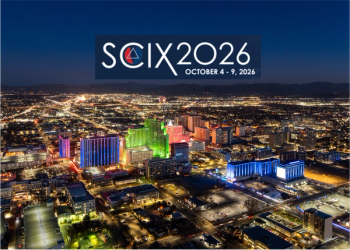
Sparks near Reno Nevada – Site of 2026 SciX Conference ©   DTM Media  -chronicles-stock.adobe.com
Wednesday's program at SciX 2026 kept returning to one question: can spectroscopy perform outside the controlled laboratory? Speakers took surface-enhanced Raman scattering (SERS), laser-induced breakdown spectroscopy (LIBS), mid-infrared photonics, chemometrics, and fluorescence excitation–emission matrix (EEM) spectroscopy into clinics, food plants, reactor coolant loops, brine fields, and drinking water supplies.
FACSS 2026 Award Interviews ©  Erin -chronicles-stock.adobe.com
Eight FACSS award winners at SciX 2026, One LIBS trailblazer. Forty-eight questions. And not one of them is a softball. Award season in spectroscopy usually means polite applause, a plaque, and a photo. We're not completely interested only in the award sessions. The eight scientists honored at SciX 2026 in Sparks, Nevada, along with LIBS researcher Alessandro De Giacomo, are pushing Raman into operating rooms, flying LIBS on drones, reading chemistry off Mars, and tracing toxic metals downwind of industrial sites. Their work makes big claims. In the coming days, Spectroscopy will sit down with eight of these researchers and ask whether those claims hold up. The interviews that follow won't just celebrate. They'll press on the gaps between simulation and experiment, between the lab bench and the clinic, and between a clever paper and an instrument someone will actually buy and use.