


The 2028 Winter Conference on Plasma Spectrochemistry will take place on Hilton Head Island, South Carolina.
The 2028 Winter Conference on Plasma Spectrochemistry will take place on Hilton Head Island, South Carolina.
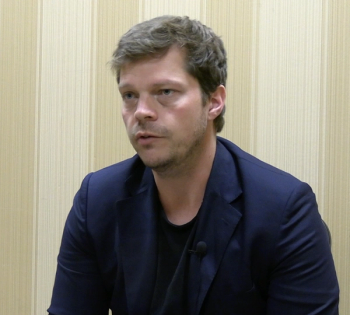
In the final part of our conversation with David Clases at the Winter Conference on Plasma Spectrochemistry, he reacts to winning both awards and offers his perspective on the key spectroscopic trends this year.

This dynamic video from the Winter Conference on Plasma Spectrochemistry reveal 2026 trends in plasma MS, imaging, and clinical analysis.
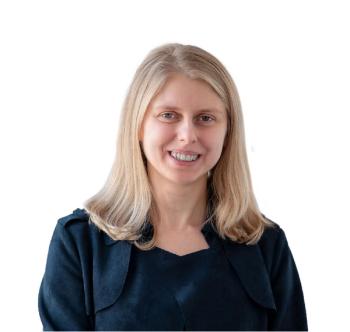
This year’s Emerging Leader in Atomic Spectroscopy Award recipient is Sarah Theiner, whose research is focused on the application of atomic spectroscopy techniques—laser ablation inductively coupled plasma–mass spectrometry (LA-ICP-MS) and single-cell ICP-MS—to expand these analytical techniques as tools for biological and clinical imaging and drug-distribution studies.
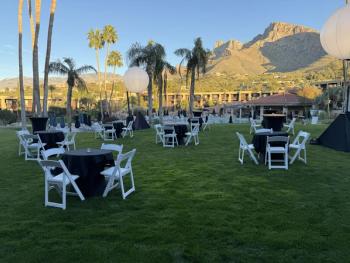
Tucson was a great host city for the 2026 Winter Conference on Plasma Spectrochemistry, but there are other cities that make sense to host future iterations of this conference. Here are our top five suggestions.
In Part III of our conversation with David Clases, we discuss how optical trapping better enables polymer identification via Raman spectroscopy, and where ICP-MS research is heading in the future.
Part II of our conversation with David Clases focused on his proof-of-concept analysis of microplastic and TiO₂ nanoparticles, and the new insights that emerged from simultaneously accessing size, molecular identity, and elemental composition at the single-particle level.
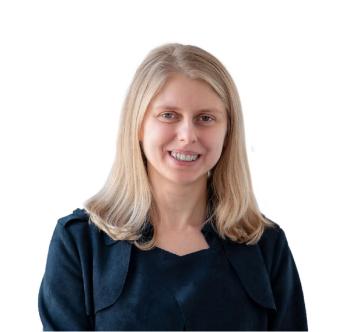
In this video segment, Sarah Theiner explains why using LA-ICP-TOF-MS was the ideal technique for this research compared to more conventional methods. She also touches upon how the findings from her study could inform the design of future chemotherapies and combination treatments.
In this interview clip, David Clasas of the University of Graz discusses the trapping mechanism of the OF2i and how it improves downstream Raman and ICP-TOFMS measurements and also highlights the multimodal approach his team used to improve microplastic analysis.
In the final part of our conversation with Ken Marcus, he discusses how external acquisition systems enhance isotopic precision and what spectroscopic trends experts should be paying attention to in 2026.
In this video segment, Alex Scheeline of the University of Illinois Urbana-Champaign discusses how hyphenated approaches are changing the nature of speciation analysis.
In this “Pathways in Spectroscopy” episode, Sarah Theiner discusses what her career transition from research to sales was like, and how her experience at the University of Vienna prepared her for the rigors of her new role at Nu Instruments.
In this video segment, Sarah Theiner dives into the research that she conducted at the University of Vienna, which focused on how chemoresistance affects drug distribution in the tumor microenvironment.
In the final part of our conversation with Martin Resano, he discusses how the use of partial least squares (PLS) regression improves the quality of the isotopic analysis data.
In this interview clip, we turn the focus to the advent of artificial intelligence (AI) and machine learning (ML) in spectroscopy, and Alex Scheeline discusses how AI and ML will enhance SIBS and LIBS calibration.
In the below video segment, we shifted our focus to the future, with Anika Retzmann of the University of Calgary giving her thoughts about what emerging applications will benefit the most from high-precision metal isotope analysis of biological systems.
In the second part of our conversation with Ken Marcus, he discusses the parameters that are most influential in enhancing Nd isotope ratio measurements, and the implications of monitoring oxide species rather than atomic ions for isotope ratio analysis, and the benefits and challenges of this approach.
In this video segment, Martin Resano of the University of Zaragoza talks about the challenges and advancements in obtaining isotopic information using atomic spectroscopy.
In the second part of our interview, Alex Scheeline discuss the current trends in SIBS and LIBS, and some of his observations from reading the recent literature on the subject.
In this interview clip, Anika Retzmann of the University of Calgary dives more deeply into the utility of multi-collector microwave inductively coupled atmospheric-pressure plasma mass spectrometry (MC-MICAP-MS) for isotopic analysis.
In the final part of our conversation with Spiros Pergantis, an analytical chemist and Professor of Analytical Chemistry at the University of Crete, he discusses some of the top trends that spectroscopists should be paying attention to in 2026.
In this video segment, Anika Retzmann explains how developing fully automated analyte purification procedures helps improve data quality and reproducibility compared to traditional approaches.
In this edition of “Inside the Laboratory,” Martin Resano, a Coordinator of the Rapid Analysis Methods with Spectroscopic Techniques (MARTE) group and as part of the Aragon Institute for Engineering Research (I3A) at the University of Zaragoza, discusses how compressed sensing spectroscopic techniques are used in his laboratory.
At the Winter Conference on Plasma Spectrochemistry, Spiros Pergantis, an analytical chemist and Professor of Analytical Chemistry at the University of Crete, sat down with Spectroscopy to discuss his group’s current research endeavors.
In this video segment, Sarah Theiner of Nu Instruments reflects on winning the Emerging Leader in Atomic Spectroscopy Award, explaining what winning the award means to her.
In the first part of our interview with Ken Marcus of Clemson University, he discusses what he enjoys about the Winter Conference on Plasma Spectrochemistry. Marcus also dives into his research and how the instrumentation his group uses allows for better separation of isobars without the need for chemical intervention, enhancing the accuracy of mass spectrometry (MS) readings.
In this video segment, Spiros Pergantis of the University of Crete discusses the supportive and tightly-knit nature of the spectroscopy community, which was evident at the Winter Conference on Plasma Spectrochemistry.
Hunter Andrews, an R&D Staff Scientist at Oak Ridge National Laboratory, discusses how other analytical approaches, such as mass spectrometry (MS), chemometrics, and electrochemistry, can help contribute to building better monitoring systems.
Patrick Parsons of the New York State Department of Health reflects on the ongoing challenges and future opportunities where X-ray fluorescence (XRF) instruments can be used to test food matrices.
In this video segment, Anika Retzmann of the University of Calgary discusses how analyzing elemental and stable metal isotopic compositions of biological systems help answer fundamentally different research questions across fields such as biomedicine and environmental science.