6. ICP-MS, CV-ICP-OES, and TDA-AAS for Mercury in Marine Sediments (2024)
Provete et al, publishing in the journal ACS Omega, compared 3 Hg determination techniques.6 After correcting for sample dilution, the method limits of quantification (LOQs), the lowest concentrations measurable with acceptable accuracy and precision, varied significantly across the different analytical techniques. Thermal decomposition amalgamation–atomic absorption spectroscopy (TDA-AAS), which thermally decomposes samples and traps mercury vapor on a gold surface for atomic absorption measurement, achieved the lowest LOQ at 0.35 µg/kg. Inductively coupled plasma–mass spectrometry (ICP-MS), a highly sensitive technique that ionizes samples in plasma and measures ions by mass, had an LOQ of 1.9 µg/kg. In contrast, cold vapor–ICP-optical emission spectrometry (CV-ICP-OES), which reduces mercury to elemental vapor for optical detection, exhibited a much higher LOQ of 165 µg/kg, demonstrating a lower sensitivity than the other methods under the study conditions.
Statistical comparison indicated that ICP-MS and TDA-AAS produced equivalent concentration values within analytical uncertainty, demonstrating comparable performance at low concentrations. CV-ICP-OES, however, lacked sufficient sensitivity for trace-level measurements, as evidenced by its substantially higher LOQ, making it less suitable for detecting low mercury concentrations in this study.
This paper is influential because it highlights the difference between instrumental and method detection limits, an often overlooked regulatory consideration. It also challenges the assumption that ICP-MS is always superior, demonstrating that direct-sampling TDA-AAS can outperform ICP-OES variants in real sediment matrices.
7. Advances in ICP-OES for Plant Analysis (2024)
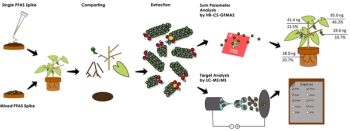
Senila’s review in Molecules surveyed recent developments in ICP-OES for analysis of plant matrices.7 Emphasis was placed on green extraction methods, microextractions, validation practices, and figures of merit. This article is influential because it reaffirms ICP-OES as a robust, cost-effective technique 50 years after commercialization. In food safety and agricultural monitoring, where throughput and moderate detection limits suffice, ICP-OES remains indispensable. The review consolidates best practices for reliable plant-element analysis, which is important for ecosystem and environmental monitoring.
8. MICAP-OES for Complex Matrices (2024)
Serrano et al, in the journal Talanta, evaluated microwave-sustained inductively coupled atmospheric-pressure plasma (MICAP) for complex environmental matrices.8 The MICAP analytical technique showed matrix robustness comparable to ICP-OES and had the advantage of reduced sensitivity to saline interferences. This work is influential because it validates an alternative plasma source capable of lower power consumption and potentially reduced operational costs. MICAP’s real-time simultaneous analysis and effective internal standardization position it as a credible competitor to traditional ICP-OES for environmental analysis.
9. DLLAPE Preconcentration for Seawater Using ICP-OES (2024)
Guijarro-Ramírez et al, as detailed in the journal ACS Omega, developed a dispersive liquid–liquid aerosol phase extraction method for Ag, Cd, Cu, Ni, and Pb in seawater.9 Procedural LOQs reached sub-µg/L levels with acceptable recoveries and uncertainties. This study is influential because it demonstrates how microextraction can extend ICP-OES into lower concentration regimes traditionally reserved for ICP-MS. By improving sensitivity without resorting to mass spectrometry, it offers cost-effective monitoring solutions for marine environments.
10. ICP-MS/MS in Environmental and Geological Applications (2025)
Balaram et al, publishing in the journal Environmental Earth Sciences, reviewed tandem ICP-MS/MS with reaction-cell technology.10 The work details interference removal strategies using gases such as O₂, H₂, NH₃, and N₂O, enabling accurate isotopic analysis from Li to U at pg/mL levels. This review is among the most influential because ICP-MS/MS represents the most transformative advancement in plasma mass spectrometry in 2 decades. Its capacity for mass-shift and on-mass measurements dramatically expands environmental isotope studies, geochronology, and trace-metal analysis with reduced spectral interference.
Final Summary
Collectively, these 10 publications define the state-of-the-art in environmental atomic spectroscopy between 2024 and 2026. The literature reveals a balance between innovation (ICP-MS/MS, MICAP, AI-driven data processing) and critical validation (method comparisons, matrix corrections, detection-limit realism). The field is increasingly interdisciplinary, integrating chemometrics, materials science, and environmental toxicology.
Conclusion
Atomic spectroscopy continues to advance in response to environmental complexity. Reaction-cell mass spectrometry, advanced XRF correction strategies, green microextraction, and alternative plasma sources expand analytical reach while improving robustness and sustainability. Importantly, several influential studies emphasize rigorous validation and realistic detection limits, reminding practitioners that analytical excellence depends as much on method design as on instrumental sophistication. The 2024 to 2026 period will likely be remembered as one in which environmental atomic spectrometry matured into a more data-driven, interference-resilient, and field-deployable discipline.
References
1. Bacon, J. R.; Butler, O. T.; Cairns, W. R. et al. Atomic Spectrometry Update—A Review of Advances in Environmental Analysis. J. Anal. At. Spectrom. 2024, 39, 11–65. DOI: 10.1039/D0JA90074E
2. Guagliardi, I.; Ricca, N.; Cicchella, D. Comparative Evaluation of ICP-MS and XRF for Screening Potentially Toxic Elements in Soil. Toxics 2025, 13, 314. DOI: 10.3390/toxics13040314
3. Cairns, W. R.; Butler, O. T.; Cavoura, O. et al. Atomic Spectrometry Update—A Review of Advances in Environmental Analysis. J. Anal. At. Spectrom. 2025, 40, 11–69. DOI: 10.1039/D4JA90056A
4. Bolea-Fernandez, E.; Clough, R.; Fisher, A. et al. Atomic Spectrometry Update: Review of Advances in the Analysis of Metals, Chemicals, and Materials. J. Anal. At. Spectrom. 2024, 39, 2617–2693. DOI: 10.1039/D4JA90052A
5. Chuparina, E. V.; Belogolova, G. A.; Baenguev, B. A.; et al. Choosing a Matrix Effects Correction Method to Quantify Cu, Zn, As and Pb in Industrially Contaminated Soils by WDXRF. Spectrochim. Acta Part B. 2026, 107497. DOI: 10.1016/j.sab.2026.107497
6. Provete, C. S.; Dalfior, B. M.; Mantovaneli, R. et al. Comparison of ICP-MS, CV-ICP-OES, and TDA-AAS for Determining Mercury in Marine Sediments. ACS Omega. 2024, 9, 49229–49238. DOI: 10.1021/acsomega.4c06144
7. Senila, M. Recent Advances in the Determination of Major and Trace Elements in Plants Using ICP-OES. Molecules 2024, 29, 3169. DOI: 10.3390/molecules29133169
8. Serrano, R.; Grindlay, G.; Gras, L.; Mora, J. Microwave-sustained Inductively Coupled Atmospheric-Pressure Plasma for Elemental Analysis of Complex Matrices. Talanta 2024, 271, 125666. DOI: 10.1016/j.talanta.2024.125666
9. Guijarro-Ramírez, N.; Sánchez, R.; Todolí, J. L. Development of a Dispersive Liquid–Liquid Aerosol Phase Extraction Method for the Quantification of Ag, Cd, Cu, Ni, and Pb in Seawater by Inductively Coupled Plasma Optical Emission Spectroscopy. ACS Omega 2024, 9, 29422–29430. DOI: 10.1021/acsomega.4c01615
10. Balaram, V.; Glorie, S.; Gilbert, S. E.; Perumalsamy, C. Geochemical, Geochronological, and Environmental Applications of Tandem ICP-MS/MS: A Review. Environ. Earth Sci. 2025, 84, 1–30. DOI: 10.1007/s12665-025-12611-8