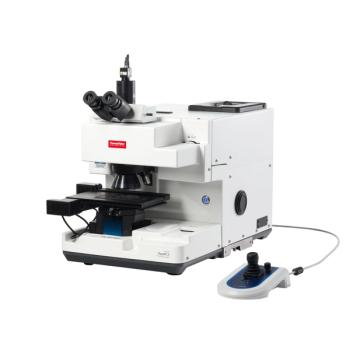
As a result, one of the main priorities for researchers is either using or developing new tools that can help them distinguish the individual compounds despite the overlapping spectra. One of the tools scientists are using is pairing Raman imaging with chemometric tools like principal component analysis (PCA) and multivariate curve resolution–alternating least squares (MCR-ALS).2
For example, a recent study that examined the Martian Nakhlite NWA 6148 demonstrates this in action. In the study, researchers used these tools to perform "spectral unmixing," separating complex data into "pure" spectral profiles and relative abundances.2 To preserve the integrity of these rare samples for future missions like the Mars Sample Return (MSR), measurements are taken using low-power lasers (often set to only 10% of maximum power) such that there is no destructive polishing or surface alteration.2 This data-driven approach ensures that no compound is assigned a "negative concentration," providing a chemically meaningful map of organics in their native context.2
How is machine learning revolutionizing the way we classify asteroids based on meteorite data?
Traditionally, asteroid classification has relied on remote sensing data that often lacks detailed mineralogical information and is prone to human subjectivity. A new methodology addressed this by training machine learning (ML) models on a vast data set of 1,422 meteorite spectra from the Reflectance Experiment Laboratory (RELAB).3 Among various algorithms, the Logistic Regression (LR) model proved most effective, achieving a classification accuracy of approximately 92%.3 A key breakthrough involved normalizing the spectral data at 0.70 µm, which enhanced the model's ability to differentiate between classes compared to the historically used 0.55 µm solar maximum.3 This ML approach has successfully linked meteorite types to their parent bodies, such as confirming the connection between howardite-eucrite-diogenite (HED) meteorites and V-type asteroids, believed to be pieces of the asteroid Vesta or Vesta-like bodies.
What can the rare "aubrite" meteorites, such as Ribbeck and Tiglit, tell us about the conditions of the early Solar System?
Aubrites are a rare class of igneous meteorites that formed under highly reducing (oxygen-depleted) conditions, similar to the environments found on Mercury.4,5 The Ribbeck meteorite, which fell in Germany in 2024, provided a pristine look at this class, revealing pure enstatite (a magnesium-rich silicate mineral [MgSiO₃]) with no iron impurities, which is a hallmark of extremely low-oxygen formation environments.4 Spectroscopy also identified rare sulfides like oldhamite (CaS) and brezinaite (a rare chromium sulfide mineral [Cr₂S₃]), which are stable only in these reduced states.4 Interestingly, the Tiglit meteorite from Morocco expanded our understanding of aubrite history by revealing unexpected phases like nanodiamonds, quartz, and cristobalite (a crystalline polymorph of silicon dioxide [SiO₂]).5 Since free silica is typically unstable in highly reducing environments, the presence of these high-temperature polymorphs suggests the meteorite underwent intense post-formational processes, including shock metamorphism and rapid cooling.5 These findings indicate that aubrites (enstatite [MgSiO₃] -rich achondrite meteorite) have a far more complex geological and impact history than previously realized.
Why is it critical for scientists to distinguish between native meteorite minerals and "terrestrial alteration"?
Distinguishing between extraterrestrial material and changes caused by Earth's environment is essential for accurately reconstructing the history of the early Solar System.1,5 When meteorites land in environments like the Sahara Desert, they immediately begin to react with the Earth's atmosphere. For example, in the Tiglit meteorite, researchers detected calcite, which they determined was not a native mineral but a product of terrestrial weathering of the calcium sulfide oldhamite (CaS).5 Similarly, the study of the CM2 chondrite NWA 12184 used vis-to-MIR reflectance to identify native phyllosilicates and olivine [(Mg, Fe)₂SiO₄], specifically to distinguish them from secondary products formed on Earth.1 Recognizing these "spectral fingerprints" of contamination ensures that scientists do not mistake Earth-based chemical reactions for evidence of water or thermal activity on the original parent asteroid.1,5
References
- Workman, Jr., J. Ancient Meteorite Reveals Space Weathering Secrets Through Cutting-Edge Spectroscopy. Spectroscopy. Available at: https://www.spectroscopyonline.com/view/ancient-meteorite-reveals-space-weathering-secrets-through-cutting-edge-spectroscopy (accessed 2026-04-20).
- Workman, Jr., J. Cracking the Martian Code: Using Raman Spectroscopy and Chemometrics to Reveal Hidden Organic Clues in Meteorites. Spectroscopy. Available at: https://www.spectroscopyonline.com/view/cracking-the-martian-code-using-raman-spectroscopy-and-chemometrics-to-reveal-hidden-organic-clues-in-meteorites (accessed 2026-04-20).
- Workman, Jr., J. Machine Learning Used for Meteorite Classification to Unlock Asteroid Composition Mysteries. Spectroscopy. Available at: https://www.spectroscopyonline.com/view/machine-learning-used-for-meteorite-classification-to-unlock-asteroid-composition-mysteries (accessed 2026-04-20).
- Workman, Jr., J. Raman Reveals Rare Ribbeck Meteorite Clues About Ancient Solar System. Spectroscopy. Available at: https://www.spectroscopyonline.com/view/raman-reveals-rare-ribbeck-meteorite-clues-about-ancient-solar-system (accessed 2026-04-20).
- Wetzel, W.; Spectroscopy Staff. Studying Tiglit Meteorite Using Raman Spectroscopy and X-Ray Diffraction. Spectroscopy. Available at: https://www.spectroscopyonline.com/view/studying-tiglit-meteorite-using-raman-spectroscopy-and-x-ray-diffraction (accessed 2026-04-20).