The 2026 SciX Conference will offer an assortment of short courses during the conference week in Sparks, Nevada. We highlight these courses below.
A continuation of our conversation with Janam Pandya, Product Manager at Thermo Fisher Scientific, highlights the challenges of operating field-deployable instruments in harsh, rugged landscapes.
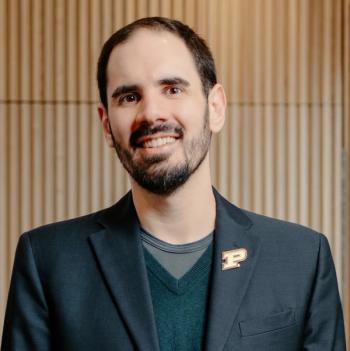
In the below video clip, Janam Pandya, Product Manager at Thermo Fisher Scientific, discusses how field-deployable instruments operate in harsh environments with limited personnel. Pandya’s work at the company has explored where
Spectroscopy: What does truly field-deployable instrumentation look like in harsh, high-variability environments with lean workforces?
Janam Pandya: There are a few things to consider when it comes to field deployable instrumentation and process analytical techniques. The most important attribute is reliability. An analyzer that's used for process monitoring should operate accurately and provide reproducible measurements and agree to or meet the ASTM standards requirements. That is the most important aspect that an analyzer must possess to be considered for an operation in oil and gas.
Beyond that, we're seeing trends where customers prefer more modular analyzers, and there are analyzers in the market that fit this description. Customers prefer to move away from bulky large-scale analyzers
With newer systems, constant calibration requirements are no longer needed and maintenance is minimal, typically performed on a yearly basis. Compare that to some of the other techniques commonly used in the field, like gas chromatographs, that require constant maintenance and dedicated operators performing monthly calibration. Sometimes when the gas chromatograph fails, it can take significant time to get it back to operational condition. Analyzers must work reliably and not cause a lot of downtime.
The last thing here that I should mention is safety. When it comes to oil and gas operation, most of these environments are Class 1 Division 2, Class 1 Division 1, ATEX or IECEx environments. When it comes to Raman analyzers specifically, it’s important that these analyzers are designed to be operational in this environment or hazardous environments without causing any safety hazard conditions. The Thermo Scientific MarqMetrix All-In-One Process Raman Analyzer was specifically designed with these requirements in mind. Ultimately, safety is a key consideration, and modern analyzers must be designed in such a way that they mitigate the risks associated with operating in hazardous conditions.
This clip is the second part of a five-part interview series with Pandya. In the next video, Pandya will explain how real-time molecular analyzers fit into digitalization and closed-loop process control.
References