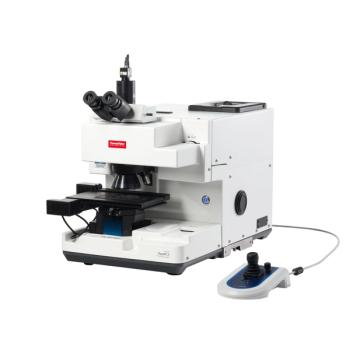
The modular system is intended to help laboratories analyzing microplastics, pharmaceutical formulations, forensic evidence, and other microscopic samples.
Pursuing careers in industry means young professionals need to understand what skills the job market values the most.
In the below video clip, Janam Pandya, Product Manager at Thermo Fisher Scientific, provides practical advice for young researchers who want to pursue careers in analytical instrumentation and industry.
Spectroscopy: What advice would you give young graduates who want to pursue careers in industry and scientific instrumentation?
Janam Pandya: The advice I have for young graduates is to be adventurous and to be in sync with the market. Currently, the market is evolving very fast. When we talk about the scientific instrumentation and spectroscopy fields, we see new technologies emerging all the time. Instruments are becoming smaller, more capable and they’re increasingly leaving the traditional laboratory environment for the field. AI is going to accelerate innovation.
The job landscape is changing just as quickly, so it’s important to be in sync and understand where the market is headed and how the technologies are evolving. I would also encourage graduates to think beyond the specific discipline in which they earned their degree. Science is very interdisciplinary, and many skills are transferable across industries and applications.
For example, knowledge in Raman spectroscopy can be applied in many different fields. One of the most exciting aspects of spectroscopy is that the technique is versatile and can be applied into so many different applications, such as biopharma, oil and gas, and chemicals and polymers, to name a few. That creates opportunities to learn a lot about different markets, develop new expertise, and build a career.
I've seen people using their spectroscopy skills to succeed in a variety of different fields and applications. My advice is, keep an eye out, explore different opportunities, and be open to applying your skills in new ways.
This clip is the final part of a five-part interview series with Pandya. You can view the other clips from our conversation with Pandya in the literature.1–4