

Scientists create a highly selective fluorescent probe, ICM-Hg, for real-time detection of mercury ions (Hg2+) in water, food samples, and live cells.
Scientists create a highly selective fluorescent probe, ICM-Hg, for real-time detection of mercury ions (Hg2+) in water, food samples, and live cells.

Researchers explore the impact of sandwich-type DNA construction and plasmonic metal on the signal generated by surface-enhanced Raman scattering (SERS) DNA sensors, giving insight on optimization strategies for improved detection.
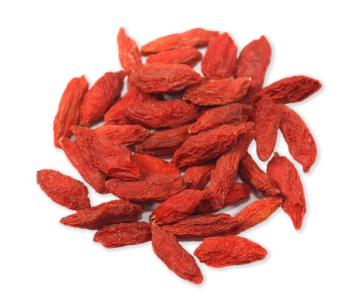
Researchers have developed a rapid and accurate method combining front-face excitation-emission matrix fluorescence spectroscopy and interpretable deep learning to identify the storage year of Ningxia wolfberry, offering a green solution to combat fraudulent practices in the market.

A new fluorescent probe designed and synthesized by researchers can effectively and selectively detect Al3+ ions through the coexistence of photo-induced electron transfer (PET) and twisted intramolecular charge transfer (TICT) mechanisms.

An in situ high-temperature Raman scattering study of monoclinic m-Ag2Mo2O7 microrods reveals an irreversible first-order structural phase transition and melting process, according to new research.

A recent study has reported the observation of room temperature phosphorescence in 2-aminopyridine (2APi) embedded in poly (vinyl alcohol) (PVA) films with direct triplet state excitation, which could have implications for future technological applications.

Scientists have investigated the structural changes of a discotic liquid crystal during its phase transitions using a combination of quantum chemical approaches and vibrational spectroscopy.

Biomedical Raman imaging is growing in the biomedical space, where technical advances and new information processing tools and techniques aim to propel the field into the future. An upcoming conference in Atlanta, Georgia, will explore these developments while bringing scientists in this field together.

The article discusses a comparison of Raman imaging assessment methods for phase determination and stress analysis of zirconium oxide layers and their application in the development of zirconium alloys, especially for nuclear applications.

A study investigated the interactions of benzeneacetamide with other molecules in organic solvents by obtaining frequencies of C=O groups in 18 solvents using infrared spectroscopy, and correlated empirical parameters with the frequencies to estimate their contributions in intermolecular interactions, finding that solvent effects on the frequencies of C=O stretching vibrations were significant.

The study investigated the effects of symmetry relaxation on one- and two-photon absorption spectra of two bichromophore systems based on difluoroborate core linked by biphenylene or bianthracene moieties, and found that deviations from planarity of building blocks ensure maximum values of two-photon transition strengths.
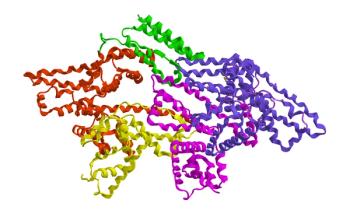
A recent study explored the binding characteristics of the tyrosine kinase inhibitor entrectinib with bovine serum albumin through multi-spectral analysis and theoretical calculations, revealing the factors affecting the stability of the ENB-BSA complex and potential ways to enhance the efficacy of ENB.

A new study has developed a low-cost, sensitive SERS substrate using silver nanoparticle functionalized paper for the detection and analysis of rotavirus in clinical stool samples.

A new study details the successful application of in situ LA-ICP-MS/MS Lu–Hf dating technique to Paleozoic-Precambrian xenotime, apatite and garnet. The study provides a more effective method for accurate age determination of samples with complex temporal records or lack of traditional U-rich accessory minerals.

A new study describes a rapid and accurate method for isotopic analysis of uranium, plutonium, and americium in post-detonation debris simulants using resonance ionization mass spectrometry (RIMS), which could be a valuable tool in nuclear forensics.

Researchers have experimentally determined the L-shell fluorescence yields and Coster-Kronig transition probabilities for ruthenium for the first time, which will improve the accuracy of X-ray fluorescence quantification results.

A new study reports on the performance of a handheld Fourier transform near-infrared spectrometer for rapid and quantitative determination of total petroleum hydrocarbon content of soils.

A simple and inexpensive method for the determination of hexavalent chromium in aqueous solutions was developed using liquid-liquid microextraction combined with total reflection X-ray fluorescence spectrometry.

Researchers describe a new method for the ultra-trace determination of mercury in seawater using vortex-assisted liquid-liquid micro-extraction (VALLME) and atomic absorption spectrometry (AAS).

New research discusses the development of laser-induced XUV spectroscopy (LIXS) as an improvement to laser-induced breakdown spectroscopy (LIBS) for rapid in situ microanalysis of materials, with the ability to determine light elements and halogens with high precision and detection limits.

A study shows that microwave-enhanced laser-induced breakdown spectroscopy (MWE-LIBS) can effectively analyze zirconium metals and oxides in nuclear fuel debris. The study found that microwaves lower the excitation temperature and increase ionization of zirconium, resulting in consistent enhancements in zirconium emissions with a higher signal-to-noise (S/N) ratio across all sample types.

A new study characterizes gas cell reactions for over 70 elements using nitrous oxide for ICP-MS/MS measurements, demonstrating the high versatility of nitrous oxide as a reaction cell gas for routine ICP-MS/MS measurements.

A new study shows how a spatial heterodyne spectrometer (SHS) combined with a flame atomic absorption (FAA) setup can be used as a tool for high-resolution atomic absorption studies.

A new study demonstrates the feasibility of using attenuated total reflection Fourier transform infrared (ATR FT-IR) mapping for the identification of the prescribed and abnormal ingredients of herbal powder preparations (HPPs) for medicines.

Researchers have proposed a two-step Aug2Tran model that uses transfer learning to build a robust real-time classification model for identifying scrap metal using an augmented training dataset consisting of laser-induced breakdown spectroscopy (LIBS) measurement of standard reference material (SRMs) samples.

Researchers have developed a new method for analyzing Raman spectroscopy data in biological samples using group- and basis-restricted non-negative matrix factorization (GBR-NMF) framework, providing a promising approach for interpreting Raman spectroscopy data in biological samples.
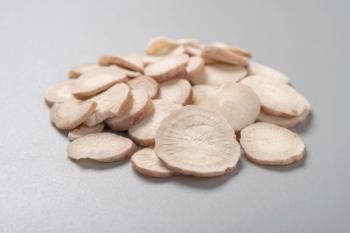
Researchers have developed a rapid and non-destructive method for evaluating the quality of Radix Paeoniae Alba and its processed products using near-infrared (NIR) spectroscopy combined with multivariate algorithms.

A recent study shows how the development of dynamic SBET represents an important advancement in air quality research.

A new study explores the compositional changes of organic matter in torrefied olive mill pomace compost using infrared spectroscopy and chemometrics.

Scientists have conducted a theoretical study on the rubrofusarin molecule, analyzing its structure, vibrational and UV-vis absorbance spectra, and discussing the impact of solvents on its properties, with implications for understanding the characteristics of Fusarium Head Blight (FHB), a fungal disease that affects cereal crops.
