

A new ICP-MS/MS method recently developed is an important step in detecting low levels of radioactive contamination in the environment.
A new ICP-MS/MS method recently developed is an important step in detecting low levels of radioactive contamination in the environment.

The DeepRaman method proposed in the study is an accurate, universal, and ready-to-use method for component identification in various application scenarios.
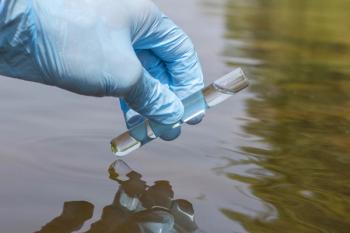
Detecting inorganic chromium in water requires a more efficient approach than the current methods. In a recent study, researchers proposed a methodology for detecting inorganic chromium (Cr) in environmental water samples using direct immersion dual-drop microextraction (DIDDME) followed by graphite furnace atomic absorption spectrometry detection.

In this review article, a comprehensive overview of the recent advances in surface plasmon resonance imaging (SPRI) and its biological applications is provided.

A new study highlighted the potential benefits of using hyperspectral imaging technology in the tea industry.

A new one-point calibration laser-induced breakdown spectroscopy (LIBS) method was used to quantify mercury in soil in the presence of matrix effects.

A recent study highlights a new SP-ICP-MS method that can be used to detect and quantify platinum nanoparticles in road dust.

Combining laser-induced breakdown spectroscopy (LIBS) with spectral imaging techniques and photogrammetry offers a new way to create three-dimensional (3D) imaging models.

Both RXES and NEXS are commonly used in in situ studies at high pressure and high temperature to investigate the electronic and structural changes of materials under extreme conditions. A new study explores both techniques when analyzing iron-bearing compounds.

Lead contamination in drinking water remains a public health concern, and a new RE-LIBS-LIF method can help detect trace amounts of lead in drinking water, which will have positive implications for human health.

Dual-band lidar systems may be capable of monitoring, understanding, and safeguarding the biological resources in tropical cloud forests.

This study demonstrates the potential of microwave-enhanced LIBS for zirconium ion emission analysis in nuclear debris decommissioning.

This study is an important contribution to the field of machine learning-enabled NIR spectroscopy, offering researchers a systematic method for selecting representative subsamples from existing data with quality measures, diagnostic tools, and visualization techniques.

This study demonstrates the potential benefits of personalized molecular fingerprinting and biochemical fractionation for applications in health diagnostics

A new colorimetric detection method for screening silver ore samples is described here.

This study presents a novel approach to achieving simplified and tunable flexibility in carborane-based emitters for quantitative vapochromic VOC sensing, which could be used to monitor air quality and volatile organic compounds.
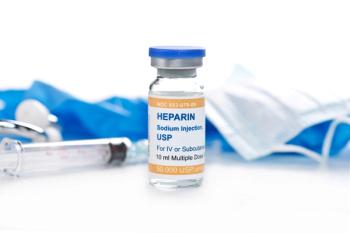
In a recent study, attenuated total reflectance-Fourier transform infrared spectroscopy (ATR-FT-IR) was proven to be a cost-effective method for analyzing herapins in pharmaceutical applications.

An overview of Raman spectroscopy and its applications in pharmaceutical analysis is presented.

Waste medical masks can be converted into carbon dots into blue emissive carbon dots, which can be used to detect harmful substances in the environment.

The development of a new benzothiazole azo dye sensor (BTS) highlights the importance of interdisciplinary research in materials chemistry and analytical chemistry for designing and synthesizing new materials with potential applications in chemical sensing and environmental monitoring.

The researchers believe that the results of this study can contribute to the development of more effective and safer approaches to reduce the toxicity of heavy metals in food and the environment.

A new bifunctional gold-platinum (Au@Pt) core–shell nanozyme can detect foodborne bacteria with high sensitivity, which suggests the technique could provide an efficient way to detect pathogens and prevent their spread through contaminated food products.
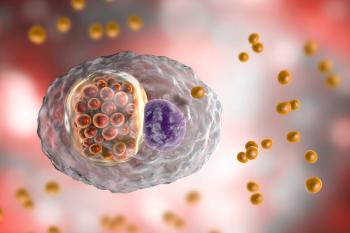
A new silicon nanoparticle (SiNP) platform was developed that could potentially lead to the development of new tools for monitoring physiological activities and metabolic reactions of cells.

With the help of machine learning, a new technique provides a promising approach for enhancing single-molecule sensing with nanoparticle conjugates.

A research team from Botswana International University of Science and Technology investigated 4-octyloxybenzoic acid, 4-decyloxybenzoic acid, and 4-hexylbenzoic acid liquid crystals, which highlighted the robustness of FT-IR and its potential in identifying materials with similar attributes.

Dmitry Kurouski has won the 2023 Emerging Leader in Molecular Spectroscopy Award for his molecular spectroscopy studies revolving around plants.

Using in situ infrared (IR) spectroscopy and ambient pressure X-ray photoelectron spectroscopy (XPS), scientists were able to differentiate “species” of peroxide.

A new algorithm combines iterative reweighted partial least squares (irPLS) with the block order and scale independent component-wise mukltiblock LS modeling to deliver more robust multiblock predictive modeling.

A recent study provided a procedure for evaluating the dead time effect and highlighted the importance of careful consideration of non-linear effects in TXRF spectroscopy.

A new method for detecting adulterated milk could lead to analyzing other food products more effectively.
