SPEC PerkinElmer 11.10
|Articles|June 15, 2018

Spectroscopy Announces the Winner of the 2019 Emerging Leader in Atomic Spectroscopy Award

Author(s)Laura Bush

Dominic Hare, a senior research fellow and the head of the Atomic Pathology Laboratory at the Florey Institute of Neuroscience and Mental Health in Victoria, Australia, has won the 2019 Emerging Leader in Atomic Spectroscopy Award, which is presented by Spectroscopy magazine.

Dominic Hare, a senior research fellow and the head of the Atomic Pathology Laboratory at the Florey Institute of Neuroscience and Mental Health in Victoria, Australia, has won the 2019 Emerging Leader in Atomic Spectroscopy Award, which is presented by Spectroscopy magazine. This annual award, begun in 2017, recognizes the achievements and aspirations of a talented young atomic spectroscopist, selected by an independent scientific committee. The award will be presented to Hare at the 2019 European Winter Conference on Plasma Spectrochemistry, where he will give a plenary lecture.

Hare’s work in atomic spectroscopy focuses on the use of inductively coupled plasma–mass spectrometry (ICP-MS) in medical research, with a strong focus on laser ablation (LA-)ICP-MS) for imaging metals in biological tissue. His work has two major research focuses: development of new methods and strategies to integrate ICP-MS into clinical research, and the application of LA-ICP-MS to the study of metals in pathology, particularly neurodegenerative diseases.

Since completing his PhD in chemistry at the University of Technology Sydney in 2009, Hare has achieved several major milestones in LA-ICP-MS imaging method development. These include the development and validation of a fully quantitative method for imaging metals in neurological tissue sections; the reconstruction of three-dimensional atlases of metals in the mouse brain, including the development of new data analysis software; and the development of a single-cell imaging technique using LA-ICP-MS.

Hare has translated his skills in atomic spectroscopy to applied neuroscience research, primarily focusing on understanding how redox-active metals, particularly iron, are involved in Alzheimer’s and Parkinson’s disease pathology. This work has extended beyond the exclusive use of LA-ICP-MS; he has also been instrumental in establishing a dedicated metalloproteomics laboratory at the Florey Institute, which is used for studying the complex interactions between metal ions and the numerous proteins that rely on them for function. He has used these skills to examine how metals such as iron, manganese, and lead may have future use as biomarkers of Alzheimer’s disease. He recently established his own research group at the Florey Institute, which is focused on the development of new atomic spectroscopy methods and their direct application to clinical pathology research, including extension into cancer diagnostics.

Hare’s analytical focus is not limited to ICP-MS, however; his work also includes to synchrotron-based techniques for atomic spectroscopy. He is a regular user of the Australian Synchrotron’s X-ray fluorescence microscopy beamline and a frequent collaborator with the European Synchrotron Radiation Facility.

Hare’s commitment to translating analytical methods to public health culminated in the publication of a 2017 article in Lancet Child and Adolescent Health discussing the need for empirical data using cutting-edge technology to set guidelines for iron supplementation to healthy infants. His work has appeared in a range of scientific journals, from Analytical Chemistry and Metallomics, to Acta Neuropathologica, Neuroimage and Nature. He believes strongly in transdisciplinary research, and has written reviews, comments, and tutorials for journals including Chemical Society Reviews, Nature Reviews Neurology, Trends in Neurosciences and Chemical Communications, in which he was named an Emerging Investigator.

Hare has published nearly 100 papers in peer-reviewed journals and has been an author on 12 talks and eight posters at scientific conferences, ranging from applied chemistry to neuroscience and public health.

For information about how to nominate a young scientist for the 2020 award, please see the call for nominations.


Related to this article

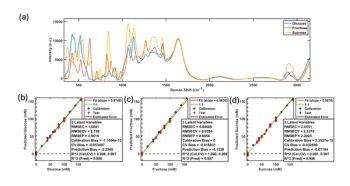
Monitoring Sugar Consumption and Ethanol Production During Yeast Fermentation Using a Raman Plate Reader and Multivariate Analysis
This column shows that a Raman plate reader paired with partial least squares regression can simultaneously quantify glucose, fructose, sucrose, and ethanol in yeast fermentation samples, using turbidity-matched calibration standards to correct for yeast-induced turbidity, and offers a rapid, label-free, high-throughput method for tracking sugar consumption and ethanol production in strain screening, media optimization, and process development.
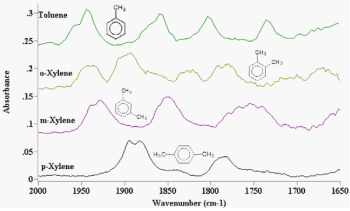
Highly Substituted Benzene Rings—The Rest of the Story II: Spectra
This column, the second installment on highly substituted benzene rings, shows that tri- and tetra-substituted substitution patterns can be distinguished by whether the ring bending peak is present and by the position of the in-phase aryl C-H wagging peak, which shifts according to how many adjacent hydrogens the ring carries.
Healthcare administrator reviewing an insurance policy schedule with a stethoscope on a clipboard, health insurance coverage, medical underwriting, prior authorization, and patient claims processing. | Image Credit: Joi_studio - stock.adobe.com
In a SciX interview, Marc Porter covered a lot of ground, from a student-driven pivot into immunoassays to a baseball analogy for Stokes and anti-Stokes scattering, and shares the open questions he is still chasing.
Ingots of pure copper or pink gold on a black background. | Image Credit: Phawat - stock.adobe.com
At SciX, Kevin Wilkinson of the Universite de Montreal explains how faster data acquisition and new software have cut analysis time and how a particle’s chemical composition can link arsenic-bearing emissions back to a copper refinery’s processes.
Spectral Frontiers: Seeing the Unseeable Microspectroscopy
Microspectroscopy, the marriage of spectroscopic chemical identification with microscopic spatial resolution, has advanced from Perkin-Elmer's first commercial infrared microspectrometer in 1953 to today's nanoscale AFM-IR probes, synchrotron-brightness infrared beamlines, and compact hyperspectral tissue imaging devices being developed for AI-assisted cancer detection.