SPEC PerkinElmer 11.10
|Articles|May 14, 2018

Call for Nominations: 2020 Emerging Leader in Atomic Spectroscopy

Spectroscopy magazine is seeking nominations for the 2020 Emerging Leader in Atomic Spectroscopy Award.The Emerging Leader in Atomic Spectroscopy Award recognizes the achievements and aspirations of a talented young atomic spectroscopist who has made strides early in his or her career toward the advancement of atomic spectroscopy techniques and applications. The winner must be within 10 years of receiving his or her highest academic degree in the year the award is presented.

Spectroscopy magazine is seeking nominations for the 2020 Emerging Leader in Atomic Spectroscopy Award.

The Emerging Leader in Atomic Spectroscopy Award recognizes the achievements and aspirations of a talented young atomic spectroscopist who has made strides early in his or her career toward the advancement of atomic spectroscopy techniques and applications. 

The winner must be within 10 years of receiving his or her highest academic degree in the year the award is presented.

The award will be presented in a plenary session at the 2020 Winter Conference on Plasma Spectrochemistry (January 12-18, 2020, in Tucson, Arizona), and the winner will be expected to give a talk at the conference.


Spectroscopy will cover the awardee’s expenses for travel to the conference. The winner will also be featured in an article in a print issue of Spectroscopy and in an interview that will be published in our electronic newsletter and on the Spectroscopy website.


Submission Deadline for 2020 Award:November 5, 2018

Submission Instructions
To nominate a candidate, please e-mail the following documents to Laura Bush, the editorial director of Spectroscopy, at laura.bush@ubm.com

1. Nomination form
Using this 

form

, please provide the following information about the person you are nominating:

  • Candidate’s full name

  • Current job title

  • Organization

  • Business address

  • Year highest academic degree was earned and from where (list degree, year, institution, and location). Important: Candidates must be within 10 years of receiving their highest degree.

  • Area(s) of focus of work

  • Short summary, in 100 words, of the candidate’s achievements or contributions (more details can follow in the sections below).

  • Please list the candidate’s five most important pieces of work (such as papers in peer-reviewed journals, technical reports written for an industrial community, or other) and explain briefly the significance of each.

  • Other key contributions to the field of atomic spectroscopy not captured above

  • Number of publications

  • Number of oral and poster presentations at scientific conferences

  • Service provided to the scientific community, such as volunteer work in scientific societies, work as a journal reviewer, and so on

  • Key awards and honors

2. Letter of support
Please include one letter of support from a member of the atomic spectroscopy community

3. CV
Please provide a current resume or CV of the candidate in a Word or PDF file.

4. Photo
Include a high-resolution headshot of the nominee in a .JPG format

Submission Deadline for 2020 Award:        November 5, 2018

Questions about the submission process should be directed to Laura Bush, the editorial director of Spectroscopy, at laura.bush@ubm.com or +1.732.346.3020.  

Related to this article

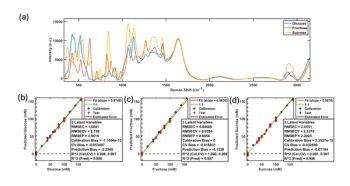
Monitoring Sugar Consumption and Ethanol Production During Yeast Fermentation Using a Raman Plate Reader and Multivariate Analysis
This column shows that a Raman plate reader paired with partial least squares regression can simultaneously quantify glucose, fructose, sucrose, and ethanol in yeast fermentation samples, using turbidity-matched calibration standards to correct for yeast-induced turbidity, and offers a rapid, label-free, high-throughput method for tracking sugar consumption and ethanol production in strain screening, media optimization, and process development.
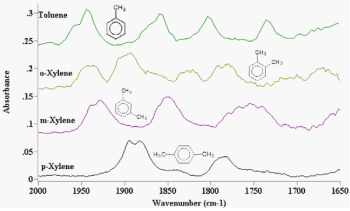
Highly Substituted Benzene Rings—The Rest of the Story II: Spectra
This column, the second installment on highly substituted benzene rings, shows that tri- and tetra-substituted substitution patterns can be distinguished by whether the ring bending peak is present and by the position of the in-phase aryl C-H wagging peak, which shifts according to how many adjacent hydrogens the ring carries.
Healthcare administrator reviewing an insurance policy schedule with a stethoscope on a clipboard, health insurance coverage, medical underwriting, prior authorization, and patient claims processing. | Image Credit: Joi_studio - stock.adobe.com
In a SciX interview, Marc Porter covered a lot of ground, from a student-driven pivot into immunoassays to a baseball analogy for Stokes and anti-Stokes scattering, and shares the open questions he is still chasing.
Ingots of pure copper or pink gold on a black background. | Image Credit: Phawat - stock.adobe.com
At SciX, Kevin Wilkinson of the Universite de Montreal explains how faster data acquisition and new software have cut analysis time and how a particle’s chemical composition can link arsenic-bearing emissions back to a copper refinery’s processes.
Spectral Frontiers: Seeing the Unseeable Microspectroscopy
Microspectroscopy, the marriage of spectroscopic chemical identification with microscopic spatial resolution, has advanced from Perkin-Elmer's first commercial infrared microspectrometer in 1953 to today's nanoscale AFM-IR probes, synchrotron-brightness infrared beamlines, and compact hyperspectral tissue imaging devices being developed for AI-assisted cancer detection.