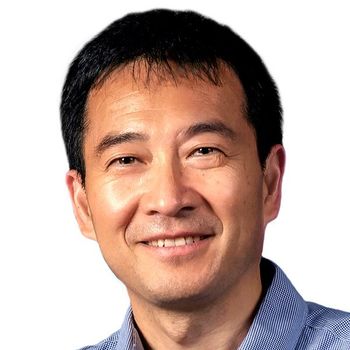
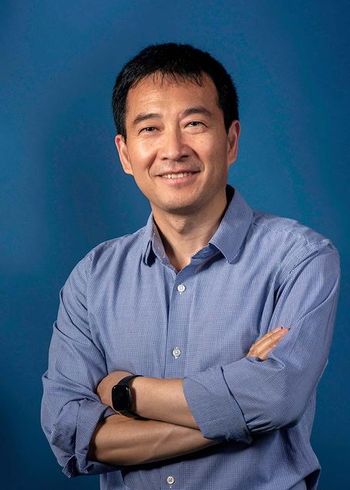
Next, in this week's “Tutorial Tuesday” clip, David Clases of the University of Graz breaks down how two-dimensional (2D) optical traps use fluidic and optical forces to trap, accelerate, and decelerate particles. This approach complements inductively coupled plasma–mass spectrometry (ICP-MS) by catching particles that technique might miss, while adding Raman spectroscopy and particle-size data to the picture.2
We're also spotlighting Spectroscopy's Top 10 Articles for July 2026. Some of the top-performing articles include Brian Smith's "Rule of Three" approach to polyester infrared (IR) analysis and Fran Adar's guide to interpreting protein Raman spectra. Rounding out the list includes articles on lithium-ion battery characterization, artificial intelligence (AI) in vibrational spectroscopy, multielement geological analysis, and more.3
And finally, don't miss episode two of “Spectroscopy Around the Globe,” where we dig into how portable X-ray fluorescence (XRF), ICP-MS, scanning electron microscopy–energy dispersive spectroscopy (SEM-EDS), Raman spectroscopy, and uranium-lead geochronology helped researchers trace Stonehenge's sarsens to Wiltshire and its mysterious Altar Stone all the way to Scotland's Orcadian Basin.4
That's your Best of the Week. Thanks for watching, and we'll see you next time.
References
- Zhang, S.; Xiao, Q.; Chen, F.; Chen, Y.; Wu, H.; Wang, G. Exploitation of Fiber Laser Induced Breakdown Spectroscopy on the Quantitative Analysis of Aluminum Alloys. Spectroscopy 2026, 41 (wp8), ASAP. Available at: https://www.spectroscopyonline.com/view/exploitation-of-fiber-laser-induced-breakdown-spectroscopy-on-the-quantitative-analysis-of-aluminum-alloys
- Clases, D.; Wetzel, W. Improving Our Understanding of Particle Behavior. Spectroscopy Online, 2026. https://www.spectroscopyonline.com/view/improving-our-understanding-of-particle-behavior (accessed August 12, 2026).
- Workman, Jr., J. Spectroscopy Top 10 Articles of the Month (July 2026). Spectroscopy Online, 2026. https://www.spectroscopyonline.com/view/spectroscopy-top-10-articles-of-the-month-july-2026- (accessed August 12, 2026).
- Wetzel, W. Spectroscopy Around the Globe, Episode 2: Stonehenge. Spectroscopy Online, 2026. https://www.spectroscopyonline.com/view/spectroscopy-around-the-globe-episode-2-stonehenge (accessed August 12, 2026).