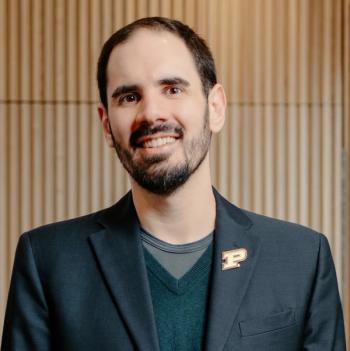
In the second part of our interview with Brandon Boor of Purdue University, he discusses how his team controls experimental variables during cleaning experiments in order to obtain interpretable data.
Top articles include our coverage of the Pittcon 2026 conference and a new “Pathways in Spectroscopy” episode.
Our coverage of the Pittcon 2026 conference in San Antonio continues. This week, we explored the use of near-infrared excitation Raman spectroscopy (NieRS) in forensic dye analysis, as well as the utility of Raman spectroscopy in detecting, identifying, and analyzing body fluids. We’ll recap those conversations here. Also, we released a new “Pathways in Spectroscopy” episode, which will focus on what it means to be an analytical laboratory manager.
This is the Best of the Week.
In this article, Spectroscopy associate editorial director Jerome Workman, Jr. explores how generative artificial intelligence (AI) is transforming analytical spectroscopy by building on traditional chemometric methods such as principal component analysis (PCA) and partial least squares (PLS). Although classical approaches focus on extracting quantitative information from spectral data, generative models learn the underlying probability distributions, enabling simulation, uncertainty estimation, and molecular prediction.1 Techniques like variational autoencoders, diffusion models, and transformers are expanding spectroscopy into nonlinear and probabilistic domains.1 These methods support applications such as calibration transfer, data augmentation, and inverse spectroscopy.1 Despite challenges in data quality and interpretability, integrating generative AI with physics-based models offers a powerful, unified framework for advancing chemical analysis and discovery.
In this interview, Dmitry Kurouski of Texas A&M University discusses the advantages of near-infrared excitation Raman spectroscopy (NIeRS) over traditional high-performance liquid chromatography (HPLC) for forensic dye analysis. Presented at Pittcon 2026, Kurouski’s work highlights NIeRS as a rapid, non-destructive technique for identifying dyes on fabrics and hair, which are often key evidence in criminal investigations.2 Unlike HPLC, NIeRS preserves samples and performs well even with contaminants like body fluids or environmental exposure.2 Combined with chemometric analysis, the method achieves high accuracy, demonstrating strong potential for reliable, real-world forensic applications.2
In this Pittcon 2026 interview, Naihao Chiang, an assistant professor at the University of Houston, discusses his work with tip-enhanced Raman spectroscopy (TERS), which is a nanoscale technique that enables chemical analysis with exceptional spatial resolution.3 In our conversation, Chiang discusses how integrating TERS with scanning ion-conductance microscopy (SICM) is an effective combination for studying light–matter interactions and chemical processes at solid–liquid interfaces.3 Apart from talking about his work at Pittcon 2026 and explaining how SICM-TERS advances vibrational nanoscopy in complex environments, Chiang also reflected on the conference’s strong technical sessions.3
In this Pittcon 2026 interview, Igor Lednev, a Distinguished Professor and Williams-Raycheff Endowed Professor at the University at Albany, State University of New York, discusses advances at SupreMEtric LLC, a company developing non-invasive forensic tools using Raman spectroscopy and statistical modeling. Presented at Pittcon 2026, his work focuses on rapid identification of biological fluids without damaging evidence.4 Supported by federal funding, the technology is transitioning toward commercialization. Lednev also highlights the integration of machine learning and software development to enhance accuracy, efficiency, and data analysis in modern forensic investigations.4
In this “Pathways in Spectroscopy” episode, Saikat Banerjee reflects on his journey through spectroscopy, beginning with fluorescence studies in India and expanding during his Ph.D. at University of Minnesota. His work spanned infrared (IR), Raman, ultraviolet–visible near-infrared (UV-vis-NIR), and nuclear magnetic resonance (NMR) spectroscopy to study reactive iron complexes. A postdoc at Northwestern University broadened his focus to materials science. Now at DuPont, he emphasizes selecting appropriate analytical tools to solve complex industrial problems.5