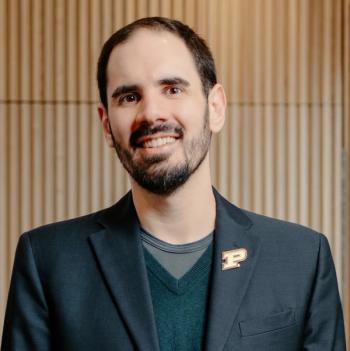
An upcoming interview with Ji-Xin Cheng, a Theodore Moustakas Distinguished Professor in Photonics and Optoelectronics at Boston University, will highlight his ongoing work in coherent Raman scattering microscopy.
How has research on boron atoms advanced over the last decade-plus? A talk at the American Chemical Society (ACS) Fall 2026 Meeting will explore this question.
At the upcoming American Chemical Society (ACS) Fall 2026 Meeting, there will be a talk dedicated on highlighting the advancements that have been made in boron nanocluster research (
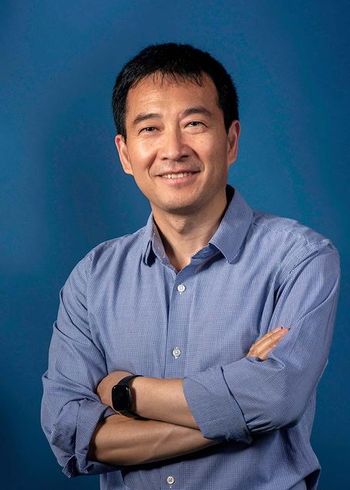
Wang is an experimental physical chemist whose research explores nanoclusters and solution-phase chemistry in the gas phase.2 He earned his BS in chemistry from Wuhan University in 1982 and his Ph.D. from the University of California, Berkeley, in 1990. After a postdoctoral fellowship at Rice University and appointments at Washington State University, Pacific Northwest National Laboratory, and Brown University, Wang advanced
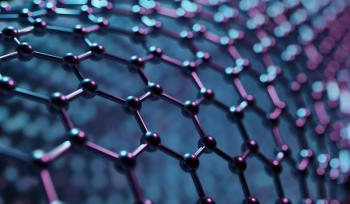
Wang will anchor his talk around the work that his laboratory group is doing, which involves studying boron cluster using techniques such as photoelectron spectroscopy and computational chemistry. By using these techniques, Wang’s research group has determined that boron clusters, unlike the element's three-dimensional (3D) bulk form, favor flat, planar arrangements.1 This finding provided the theoretical basis for borophene, which is a single-atom-thick boron sheet now synthesized on inert substrates in laboratories.1 The discovery also reflects the trajectory of carbon research. Historically, the study of clusters preceded the identification of fullerenes, nanotubes and graphene, which are materials that reshaped fields from electronics to medicine.1
Wang will touch upon the identification of a planar 36-atom boron cluster containing a hexagonal vacancy at its center, which offered the first experimental support for borophene's viability.1 His team also identified a 40-atom boron cluster, B40, as the first confirmed all-boron fullerene, which is a hollow, cage-like structure with a diameter slightly smaller than that of C60, the carbon fullerene known as buckminsterfullerene.1
The talk will also cover more recent findings on larger boron clusters, including transitions between 2D and 3D geometries and the emergence of features resembling bulk boron.
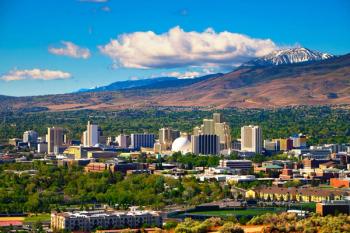
ACS generally holds two conferences throughout the year, one in the spring and the other in the fall. The ACS Fall 2026 Meeting will take place this year from August 23rd to the 27th in Chicago, Illinois at the McCormick Place Convention Center.
The ACS Fall 2026 Meeting provides a forum for researchers, scientists, vendors, and undergraduate and graduate students to meet in one place to discuss the latest trends, technologies, and advancements in chemistry and related disciplines.3 The conference is known for having an extensive technical program, which provides attendees ample opportunities to attend talks on a wide variety of subjects that pique their interest.
Apart from the technical program, the ACS conferences are also designed to facilitate interpersonal communication and networking. Layered into the conference program are numerous social events and networking opportunities for attendees to make those new connections or catch up with old colleagues.3
The spectroscopy community would benefit from attending this conference. There will be numerous talks that highlight how laser-induced breakdown spectroscopy (LIBS), Raman spectroscopy, infrared (IR) spectroscopy, nuclear magnetic resonance (NMR), mass spectrometry (MS), X-ray methods, chemometrics, and hyperspectral imaging (HSI) are being used to advance critical industries such as pharmaceutical analysis, environmental analysis, and forensics.1
For more information about the upcoming conference, you can visit the ACS website.