News|Videos|July 17, 2026

Best of the Week: IR Spectral Interpretation, Women in STEM

Top articles published this week include a new “IR Spectral Interpretation” column and a preview of the upcoming American Chemical Society (ACS) Fall 2026 Meeting.

Welcome back to Best of the Week, where we round up the top stories from Spectroscopy. This week, we've got a new IR interpretation column, a look at how spectroscopy curricula are evolving, and a preview of the ACS Fall 2026 meeting. Let's get into it.

First, how do chemists tell substituted benzene rings apart just by looking at an IR spectrum? The latest installment of our "IR Spectral Interpretation" column tackles this, expanding beyond mono- and disubstituted compounds to cover tri-, tetra-, and penta-substituted rings.1 The short answer comes down to two features: the position of the C–H wagging vibration, which depends on how many adjacent hydrogens are moving in phase, and the presence or absence of the ring bend peak, which depends on the molecule's symmetry.1 Together, these two clues let chemists distinguish nearly all substituted benzene ring structures.

Next, are spectroscopy curricula keeping up with what industry actually needs? On this episode of "Pathways in Spectroscopy," Mary Kate Donais of St. Anselm College says not quite. Drawing on her own background in government and industry labs, she points to practical, hands-on skills, like solution and sample preparation, as areas textbooks often skip over.2 She also flags Raman spectroscopy and X-ray fluorescence (XRF) as increasingly essential, especially in pharmaceuticals, biotechnology, specialty chemicals, and forensics.2 Her goal in the classroom is to give students broader exposure to modern techniques without blowing up the curriculum.

And finally, mark your calendars as the ACS Fall 2026 meeting runs August 23rd through 27th in Chicago, Illinois, marking ACS's 150th anniversary. Currently, there are keynotes from four Nobel Laureates planned, plus a Kavli Lecture Series on AI in chemistry and green chemistry.3 There is one session we wanted to highlight in particular: Cherelle Bishop will give a talk on why women leave STEM careers mid-path, and how entrepreneurship can offer a different route forward.4

And that’ll do it for Best of the Week. Thanks for watching, thanks for reading, and we’ll see you next time.

References
  1. Smith, B. C. Substituted Benzene Rings the Rest of the Story I: Peak Positions. Spectroscopy 2026, 41 (4), ASAP. https://www.spectroscopyonline.com/view/substituted-benzene-rings-the-rest-of-the-story-i-peak-positions (accessed July 16, 2026).
  2. Donais, M. K.; Wetzel, W. Is There Underrepresentation in Current Spectroscopy Curriculums? Spectroscopy Online, 2026. https://www.spectroscopyonline.com/view/is-there-underrepresentation-in-current-spectroscopy-curriculums- (accessed July 16, 2026).
  3. Wetzel, W.; Spectroscopy Staff. What Are Some of the Keynote Events Set to Take Place at the ACS Fall 2026 Meeting? Spectroscopy Online, 2026. https://www.spectroscopyonline.com/view/what-are-some-of-the-keynote-events-set-to-take-place-at-the-acs-fall-2026-meeting (accessed July 16, 2026).
  4. Wetzel, W.; Spectroscopy Staff. Are Women Leaving STEM Careers to Become Entrepreneurs? Spectroscopy Online, 2026. https://www.spectroscopyonline.com/view/are-women-leaving-stem-careers-to-become-entrepreneurs- (accessed July 16, 2026).


Related to this article

2026 SciX Conference Summary ©   Bos Amico -chronicles-stock.adobe.com
SciX 2026, the annual conference presented by the Federation of Analytical Chemistry and Spectroscopy Societies (FACSS), ran October 4–9, 2026, at the Nugget Casino Resort in Sparks, Nevada. The program spanned atomic and molecular spectroscopy, mass spectrometry, chemometrics, and bioanalysis. This report follows the meeting day by day, from Monday's clinical Raman plenaries to Friday's closing talks, drawing on the online program and Spectroscopy coverage of award winners, highlighting efforts to move Raman, SERS, LIBS, and single-particle ICP-MS toward clinical, environmental, and field use.
2026 SciX Conference Innovation ©   Dilok -chronicles-stock.adobe.com
Four finalists for the FACSS Innovation Award presented on the afternoon of October 8, 2026, at SciX 2026. Their work spanned drone-mounted laser-induced breakdown spectroscopy (LIBS), a touch-and-sound virtual reality system for blind scientists, polarized infrared (IR) imaging of shape memory polymers, and an ultrasound-activated plasmonic nanoplatform aimed at Parkinson’s disease.
Sparks near Reno Nevada – Site of 2026 SciX Conference ©   DTM Media  -chronicles-stock.adobe.com
Wednesday's program at SciX 2026 kept returning to one question: can spectroscopy perform outside the controlled laboratory? Speakers took surface-enhanced Raman scattering (SERS), laser-induced breakdown spectroscopy (LIBS), mid-infrared photonics, chemometrics, and fluorescence excitation–emission matrix (EEM) spectroscopy into clinics, food plants, reactor coolant loops, brine fields, and drinking water supplies.
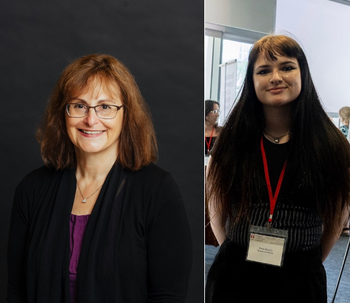
Nancy Pleshko (left) is a Laura H. Carnell Professor Emerita in Temple University's Department of Bioengineering. Petra A. Baylin (right) is a research assistant in the Tissue Imaging and Spectroscopy Lab at Temple University. Photo Credits: © Nancy Pleshko and Petra Baylin
As part of our coverage of the SciX 2026 Conference, Nancy Pleshko and Petra Baylin of Temple University sat down with Spectroscopy to talk about their recent study, explaining how Fourier transform infrared (FT-IR) imaging of ultra-high weight molecular polyethylene (UHMWPE) implants permits oxidation evaluation throughout the sample yielding insight into failure.