News|Videos|July 16, 2026

What is the Gordon Research Conference on Vibrational Spectroscopy?

An upcoming conference will review the advances in vibrational spectroscopy.

From August 2nd to the 7th, the 2026 Vibrational Spectroscopy Gordon Research Conference (GRC) will take place at Southern New Hampshire University in Manchester, New Hampshire. The conference, set over five days, will feature numerous talks, symposia, and networking opportunities for attendees. The leading scientists and researchers will discuss the latest advances in vibrational spectroscopy, highlighting their ongoing research work. Particular emphasis will be paid toward emerging techniques that probe molecular structure and dynamics across multiple length and time scales.1

As one of the premier international meetings in the field, the conference is designed to foster the presentation of cutting-edge, unpublished research while encouraging in-depth scientific discussion and collaboration among researchers at every career stage.1

What is the theme of this year’s conference?

The Vibrational Spectroscopy GRC regularly has a recurring theme throughout the conference that reflects a growing or important trend in the industry. This year’s theme is called “Structure and Dynamics on Multiple Length and Time Scales.”1 The theme reflects the growing integration of traditional vibrational spectroscopy with advanced imaging methods, including sum-frequency generation (SFG) microscopy, photothermal microscopy, and next-generation Raman microscopy.1,2 By bringing together experimentalists and theoreticians, the meeting aims to advance both the development of new spectroscopic methodologies and their application to challenging scientific questions.1

What is the main objective of the 2026 Vibrational Spectroscopy Gordon Research Conference?

One of the main objectives of the conference is to give researchers the chance to gain a better understanding of how vibrational motions provide detailed insights into molecular systems, from small polyatomic molecules to complex biomolecules, liquids, and nanomaterials.1 The technical program will also highlight how these analytical techniques are being applied to address important challenges in energy, environmental science, biology, and medicine.1

The GRC encourages meaningful scientific exchange through extended discussions following presentations, poster sessions featuring researchers from all career stages, and informal networking opportunities during communal meals and scheduled free time.1 This format is intended to promote the exchange of ideas across disciplines, foster lasting collaborations, and strengthen the international vibrational spectroscopy community while accelerating innovation in both fundamental research and real-world applications.1

References
  1. Gordon Research Conference, Structure and Dynamics on Multiple Length and Time Scales. Gordon Research Conference, 2026. https://www.grc.org/vibrational-spectroscopy-conference/2026/ (accessed July 8, 2026).
  2. Workman, Jr., J. New Product Advances in Vibrational and Atomic Spectroscopy (2025–2026). Spectroscopy 2026, 41 (2), 16–21. DOI: 10.56530/spectroscopy.mm4170h4

Related to this article

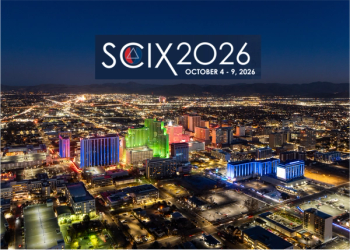
2026 SciX Conference Summary ©   Bos Amico -chronicles-stock.adobe.com
SciX 2026, the annual conference presented by the Federation of Analytical Chemistry and Spectroscopy Societies (FACSS), ran October 4–9, 2026, at the Nugget Casino Resort in Sparks, Nevada. The program spanned atomic and molecular spectroscopy, mass spectrometry, chemometrics, and bioanalysis. This report follows the meeting day by day, from Monday's clinical Raman plenaries to Friday's closing talks, drawing on the online program and Spectroscopy coverage of award winners, highlighting efforts to move Raman, SERS, LIBS, and single-particle ICP-MS toward clinical, environmental, and field use.
Sparks near Reno Nevada – Site of 2026 SciX Conference ©   DTM Media  -chronicles-stock.adobe.com
Wednesday's program at SciX 2026 kept returning to one question: can spectroscopy perform outside the controlled laboratory? Speakers took surface-enhanced Raman scattering (SERS), laser-induced breakdown spectroscopy (LIBS), mid-infrared photonics, chemometrics, and fluorescence excitation–emission matrix (EEM) spectroscopy into clinics, food plants, reactor coolant loops, brine fields, and drinking water supplies.