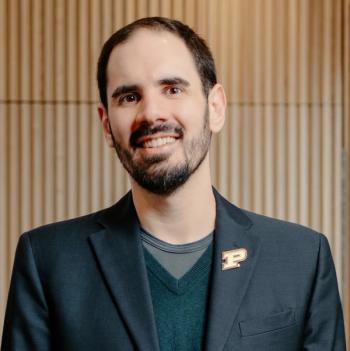
An upcoming interview with Ji-Xin Cheng, a Theodore Moustakas Distinguished Professor in Photonics and Optoelectronics at Boston University, will highlight his ongoing work in coherent Raman scattering microscopy.
Senior editor Will Wetzel recaps the top articles published this week on Spectroscopy.
Welcome back to Best of the Week from Spectroscopy Magazine. I'm Will Wetzel, and this week we're covering a lot of ground — from the top 10 most-read manuscripts of March, to how spectroscopy is reshaping the cannabis industry, to a fascinating look inside an Egyptian mummy. Let's get into it.
First up — the Top 10 Articles of March.
Each month, Associate Editorial Director Jerome Workman Jr. compiles the most-accessed DOI-registered manuscripts from Spectroscopy and LCGC International, and March's list is a strong snapshot of where the field is heading. We're seeing heavy interest in infrared (IR) analysis of polymers, lithium-ion battery characterization, and Raman spectroscopy for protein structure.1 Chemometrics and AI-assisted spectroscopy also made a strong showing, along with portable LC systems for environmental use.1 If you want to know what your peers are reading, this list is the place to start.
Next — Spectroscopy in the Modern Cannabis Laboratory.
With 420 Day falling on Monday, it felt like the right moment to explore how spectroscopy is evolving cannabis testing. Gas chromatography–mass spectrometry (GC–MS) and high-performance liquid chromatography (HPLC) remain the gold standard for cannabinoid quantification, but laboratories are increasingly turning to near-infrared (NIR), Fourier transform infrared (FT-IR), Raman, and quantitative nuclear magnetic resonance (NMR) for faster, non-destructive screening.2 Inductively coupled plasma–optical emission spectroscopy (ICP-OES) is helping detect heavy metals, and laser-induced fluorescence (LIF) is enabling rapid field identification.2 Together, these tools are making cannabis testing faster, cheaper, and more accessible without sacrificing accuracy.
Then — Mummies, Minerals, and Ancient Trade Routes.
In a new interview, Professor Didier Gourier of Chimie ParisTech-PSL describes how combining µ-PIXE and µ-IBIL spectroscopy revealed surprising details in Egyptian mummy samples, including pigments, environmental dust particles, and evidence of 19th-century mercury-based preservation.3 Most strikingly, vanadium and nickel ratios in one mummy's bitumen suggest it didn't come from the Dead Sea at all, pointing to unknown trade routes or supply disruptions in the ancient world.3
There's more in this week's roundup, including new research on ATR-FTIR mechanisms and a look at CEA-Leti's portable EPR spectrometer initiative.4,5
That's your Best of the Week. See you next time.