There are many challenges in the fast-developing field of microplastic analysis. In this webinar, we will hear from two speakers addressing quite different challenges, but nonetheless, challenges faced by many. The first speaker, Dr. Gbotemi Adediran from the UK Centre for Ecology and Hydrology, will explore the opportunities and challenges in analyzing Sub-micron-sized (< 5µm) microplastics analysis by LDIR. In the second presentation, Dr Julia Jaeger from Eurofins Environmental Testing – Australia & New Zealand will explore advancements and challenges related to the application of LDIR for routine microplastic analysis.
Register Free: https://www.spectroscopyonline.com/spec_w/microplastics-analysis
Event Overview:
There are many challenges in the fast-developing field of microplastic analysis. The exponential increase in plastic production has posed significant challenges in effectively managing resulting waste, with microplastic pollution emerging as a critical environmental issue in the 21st century. Indeed, as larger microplastic particles degrade into submicron-sized (< 5µm) particles, their prevalence in the environment is expected to rise substantially by up to fivefold.
In this webinar, we will hear from two speakers addressing quite different challenges, but nonetheless, challenges faced by many. The first speaker, Dr. Gbotemi Adediran from the UK Centre for Ecology and Hydrology, will explore the opportunities and challenges in analyzing Sub-micron-sized (< 5µm) microplastics analysis by Laser Direct Infrared (LDIR). To accurately comprehend the fate of microplastics and their impact, it becomes imperative to employ an analytical approach that precisely detects and quantifies these submicron-sized microplastics. Micro-spectroscopic techniques that combine the detection of particles with the identification of their chemical composition remain the most precise method for microplastic analysis. However, the accuracy of this approach varies depending on particle size, with detection capabilities diminishing as the particles reach the submicron scale. This talk will describe the use of LDIR chemical imaging to detect and quantify submicron-sized microplastics. It will give a practical demonstration of analyzing microplastics (< 5µm) in both air and tap water while highlighting the analytical limitations.
In the second presentation, Dr Julia Jaeger from Eurofins Environmental Testing – Australia & New Zealand will explore advancements and challenges related to the application of LDIR for routine microplastic analysis. Establishing a commercial laboratory for microplastic testing using the LDIR Chemical Imaging System has been a remarkable journey for Eurofins Environment Testing Australia and New Zealand. The laboratory has encountered significant challenges from its inception as an R&D project in 2019 to its current operation of two LDIR systems since April 2023. The limited availability of standards and reference materials posed a major obstacle. Still, stringent quality control measures and blank procedures have been implemented to ensure reliable results. Excitingly, the laboratory has recently submitted its accreditation package for Potable Water, aiming to become the first accredited microplastic testing facility in Australia. This presentation will highlight the journey of establishing the commercial laboratory, focusing on the challenges faced and the achieved milestones. The laboratory's capabilities encompass particle enumeration, size determination, morphology analysis, color assessment, and microplastic identification in diverse environmental matrices, including water, soil, biosolids, sediment, and biota. By sharing our experiences, this talk aims to contribute to the broader understanding of microplastic analysis, supporting informed decision-making and environmental management strategies to mitigate the environmental impacts of microplastics.
Key Learning Objectives:
- Challenges in microplastic analysis in a commercial, routine laboratory.
- Quality control measures critical to microplastic analysis.
- Challenges and opportunities in pushing infrared spectroscopy into the sub-micron size range.
Who Should Attend:
- Microplastics researchers
- Microplastics analysts from commercial, QA, or research labs seeking to understand key challenges in Microplastics analysis
- Those interested in the contamination of wastewater, seawater, freshwater, air, sediments, and food (such as fish, shellfish, crustaceans, and bottled water)
Speakers:
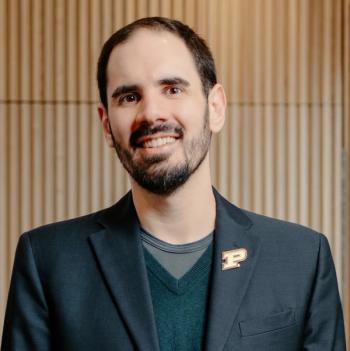
Dr. Gbotemi Adediran
Emerging Contaminants Scientist
United Kingdom Centre for Ecology and Hydrology (UKCEH)
Dr. Gbotemi Adediran obtained his M.Sc. in Water and Environmental Management from the University of Bristol and his Ph.D. in Biogeochemistry from the University of Edinburgh. His research is centered on the use of advanced micro-spectroscopic techniques to understand hydro-biogeochemical processes of nutrients and contaminants from the nanoscale to the field scale.
Dr. Julia Jaeger
Technical Specialist
Eurofins Environmental Testing
Australia & New Zealand
Julia Jaeger, Ph.D., is a Technical Specialist at Eurofins Environment Testing Australia & New Zealand. With a master's degree in Food Chemistry and a Ph.D. in Physical Chemistry, she possesses extensive expertise in Analytical Chemistry. Julia's contributions span various sectors, including environmental and atmospheric chemistry, food analysis, and forensics. In 2019, she established a cutting-edge laboratory for commercial microplastic testing, employing the Laser Direct Infrared (LDIR) Chemical Imaging System. Her specialization also includes the analysis of volatile organic compounds (VOCs) and pesticides.
Register Free: https://www.spectroscopyonline.com/spec_w/microplastics-analysis