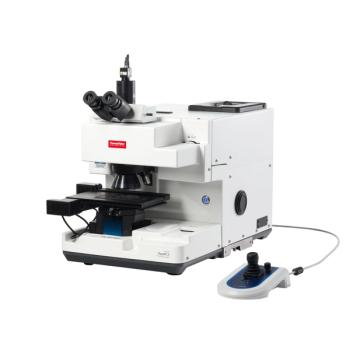
Vibrational spectroscopy addresses all these concerns. Vibrational spectroscopic techniques require no reagents or sample destruction, and portable versions of the instruments already exist, raising the possibility of on-site screening tools for investigators working active scenes.1
How did ATR-FTIR and Raman microspectroscopy perform on sand and soil?
The two techniques performed differently depending on the substrate. On sand, both instruments picked up spectral signals from the blood and the substrate, but the chemometric models found species separation more difficult than expected.1 On soil, ATR-FTIR still detected clear blood-related spectral bands alongside signals from the substrate, but Raman microspectroscopy could not consistently register blood at all.1
The team also tested whether the techniques could distinguish the sex of the blood donor, which is a capability with obvious value in narrowing suspect or victim pools. Using a single donor per sex for each species, the researchers found only limited separation on neutral substrates.1 On sand and soil, ATR-FTIR combined with chemometric analysis achieved some degree of sex differentiation, while Raman microspectroscopy did not produce distinguishable patterns.1
What are the key takeaways from this study?
Although this study showed encouraging results for how vibrational spectroscopy can be used in forensic analysis, there are also a few caveats that the authors made clear in the conclusion of their paper. For one, the sample size only included a small number of donors, and the sex-discrimination testing in particular relied on just one donor per sex per species.1 Because of the small sample size, it is not enough to establish population-level reliability. Second, the researchers acknowledged that they only tested one type of sand and one type of soil, and these natural substrates could vary in their mineral composition. This is important because it is a factor that can alter spectral readings and background interference.1 The researchers called for follow-up studies with larger and more diverse donor cohorts, a wider range of soil and sand types, and refined Raman acquisition settings, including a longer-wavelength 1064 nm laser, to reduce the fluorescence that limited performance on soil.1
However, the main takeaway from this study is that it demonstrated a proof-of-concept that ATR-FTIR, in particular, can retrieve usable biological information from small, degraded bloodstains on outdoor substrates without consuming the sample, which is a capability current presumptive tests and destructive assays cannot offer.1 Whether the approach becomes a validated field or laboratory tool will depend on the larger-scale studies the authors say are still needed before it can support casework.
References
- Cano-Trujillo, C.; Montalvo, G.; Garcia-Ruiz, C.; Toledo-Gonzalez, V. Forensic Approach For Distinguishing Species and Sex of Multispecies Bloodstains in Soil and Sand by Vibrational Spectroscopy. For. Sci. Int. 2026, 388, 113082. DOI: 10.1016/j.forsciint.2026.113082
- Jackson, G. P. Error Terror in Forensic Science: When Spectroscopy Meets the Courts. Spectroscopy 2016, 31 (11). Available at: https://www.spectroscopyonline.com/view/error-terror-forensic-science-when-spectroscopy-meets-courts