A new study published in Geoderma Regional demonstrates the potential of near-infrared (NIR) spectroscopy as a tool for assessing soil and tree ecological traits (1). Given that environmental monitoring is crucial for sustainable forest management, the research team, comprised of scientists from several Argentinian institutions, presents a method that could help propel forest conservation efforts forward while driving down costs.
What did the study focus on?
The research team sought to better understand forest ecosystems by looking at carbon and nutrient turnover. Both these processes are essential in monitoring the health of forests (2). This includes biodiversity sustainability and long-term carbon storage (1,2).
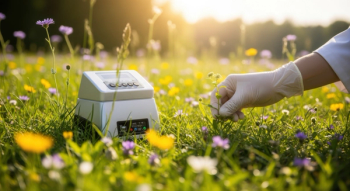
Traditional methods for characterizing soil and tree properties are accurate, but they are often costly, labor-intensive, and not feasible for large-scale or long-term use. However, NIR spectroscopy is different in that it uses reflected light to characterize organic materials quickly and non-destructively (1). The positive externalities, therefore, are that this method can preserve the physical integrity of samples and conduct the necessary analysis much more quickly.
The researchers conducted their work in the El Manso Valley, a region in Argentina comprised of native forests, grazed grasslands, and horticultural land. Soil samples were collected at four depths across three land uses (native forest, grazed grassland, and horticultural land) while leaves were sampled from two provenances of Nothofagus alpina, an ecologically and economically important tree species in South America (1). The goal was to determine whether NIR spectroscopy could classify samples, predict biological and chemical properties, and estimate relatedness matrices traditionally calculated using genetic data (1).
How was principal component analysis (PCA) used in the study?
The researchers used PCA to demonstrate that NIR spectroscopy captured meaningful ecological differences within the landscape. For example, soil samples from native forest clustered distinctly from those collected in heavily grazed land and horticultural fields, highlighting the sensitivity of NIRS to management-driven ecological change (1).
What were the results of the study?
One of the most important outcomes of the study was the performance of predictive models built using NIR spectroscopy data. The models built by the research team achieved high accuracy for soil microbial biomass (R² = 0.80), biological activity (R² = 0.94), and total carbon (R² = 0.86), three variables that are essential to understanding soil fertility and carbon cycling (1). These results indicate that NIR spectroscopy could drastically improve monitoring of below-ground ecological dynamics in natural forests and agricultural frontier landscapes, particularly in regions where conventional laboratory measurements are prohibitively expensive or slow (1). Leaf trait modeling, while less reliable (R² = 0.60–0.40), still showed significant potential and demonstrated that methodological refinements could further increase accuracy (1).
Another important result was the correlations comparing relatedness matrices calculated using NIR spectroscopy data to those derived from genetic markers. Although these correlations were low, the researchers emphasized that the two approaches offer complementary insights rather than redundancy (1). The genetic data uncovered hereditary lineage, whereas NIR spectroscopy captured the phenotypic responses shaped by both genetics and environmental conditions (1). Therefore, coexistence of these methods opens new opportunities for integrative ecological research.
What are the main takeaways of the study?
There are several key takeaways from this study, not the least of which being the utility of NIR spectroscopy in land management strategies moving forward. Because NIR spectroscopy requires little sample preparation and allows the processing of hundreds of samples in a short time, it could serve as a cornerstone technology for large-scale forest monitoring programs (1). This is particularly important in regions like Patagonia and the Andean foothills of Argentina, where land-use change threatens native forest ecosystems and rapid, affordable monitoring tools are urgently needed (1).
However, the authors acknowledge a couple key limitations of their study. Although NIR spectroscopy proved highly reliable for soil indicators, improvements are still needed to strengthen leaf trait prediction accuracy. Further calibration studies expanded sample libraries, and technological refinements could ensure broader applicability to foliage-based monitoring in the future (1).
References
- Alvarez, V. E.; Arias-Rios, J. A.; Guidalevich, V.; et al. Using Near-infrared Spectroscopy as a Cost-effective Method to Characterize Soil and Leaf Properties in Native Forest. Geo. Reg. 2025, 40, e00948. DOI: 10.1016/j.geodrs.2025.e00948
- Yang, Y.; Zhou, H.; Wang, W.; et al. Transient Flooding and Soil Covering Interfere with Decomposition Dynamics of Populus euphratica Leaf Litter: Changes of Mass Loss and Stoichiometry of C, N, P, and K. Forests 2022, 13 (3), 476. DOI: 10.3390/f13030476