Register Now: Advances in Spectroscopy for Pharma and Biopharmaceutical Analysis Symposium
News|Videos|January 15, 2026

Analyzing Elemental and Stable Metal Isotopic Compositions of Biological Systems

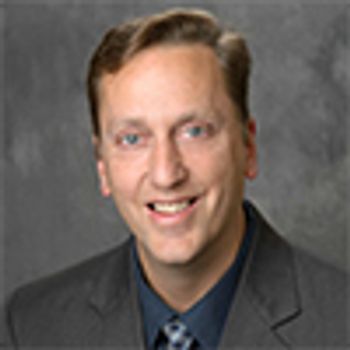
In this video segment, Anika Retzmann of the University of Calgary discusses how analyzing elemental and stable metal isotopic compositions of biological systems help answer fundamentally different research questions across fields such as biomedicine and environmental science.

At the Winter Conference on Plasma Spectrochemistry, Anika Retzmann, a postdoctoral researcher in the Atom Mass Lab at the University of Calgary, will be delivering a talk titled, “Introducing MC-MICAP-MS: Metal Isotope Abundance Ratio Measurements Using a N2-based Plasma Ion Source” (1).

Retzmann is an analytical chemist and isotope science researcher specializing in elemental and stable metal isotopic analyses, with applications spanning environmental science, archaeometry, biomedicine, and the life sciences (2). Her work focuses on advancing analytical methodology to better understand the roles and signatures of essential elements in biological and environmental systems. Her research integrates state-of-the-art techniques such as multi-collector inductively coupled plasma–mass spectrometry (MC-ICP-MS), thermal ionization mass spectrometry (TIMS), and automation of analyte purification to increase throughput and precision in isotopic measurements (2). Retzmann has played a leading role in developing fully automated chromatographic purification procedures that significantly enhance sample throughput for isotopic analyses of elements like lead, zinc, and calcium, which are crucial for both clinical and research contexts.

She earned her PhD in Analytical Chemistry at the University of Natural Resources and Life Sciences in Vienna under Prof. Thomas Prohaska, where she began building expertise in high-precision isotope ratio methodologies (2). Prior to her current work in Canada, Retzmann conducted international research collaborations and postdoctoral studies in Austria and Germany. Her contributions include pioneering integration of the MICAP nitrogen plasma ion source with multi-collector mass spectrometry and leading projects that bridge methodological innovation with practical application (2). She is active in the isotope science community, including conference organization and workshop participation, and has numerous peer-reviewed publications in high-impact analytical journal (2).


Spectroscopy sat down with Retzmann at the Winter Conference on Plasma Spectrochemistry to talk about her research. In this video segment, Retzmann discusses how analyzing elemental and stable metal isotopic compositions of biological systems help answer fundamentally different research questions across fields such as biomedicine and environmental science.

This video clip is the first part of our conversation with Retzmann. To stay up to date on our coverage of the Winter Conference, click here.

References

  1. IASA, Winter Conference on Plasma Spectrochemistry. IASA. Available at: https://iasa.world/winter-plasma-conference (accessed 2026-01-13).
  2. University of Calgary, Anika Retzmann. UCalgary. Available at: https://live-ucalgary.ucalgary.ca/labs/atommass/contacts (accessed 2026-01-13)


Related to this article

Abstract concept of connecting molecules DNA network vector neurons | Image Credit: © bill2499 - stock.adobe.com
Garth Simpson of Purdue University outlines plans to survey more ordered molecular assemblies and to apply interface-specific chiral spectroscopy to enzyme reactors, solid-phase synthesis, spin-selective reactions, and, ultimately, a new analytical method.
Healthcare administrator reviewing an insurance policy schedule with a stethoscope on a clipboard, health insurance coverage, medical underwriting, prior authorization, and patient claims processing. | Image Credit: Joi_studio - stock.adobe.com
In a SciX interview, Marc Porter covered a lot of ground, from a student-driven pivot into immunoassays to a baseball analogy for Stokes and anti-Stokes scattering, and shares the open questions he is still chasing.