News|Videos|January 12, 2026

An Inside Look at Glow Discharge Optical Emission Spectroscopy

Author(s)Will Wetzel
Fact checked by: John Chasse

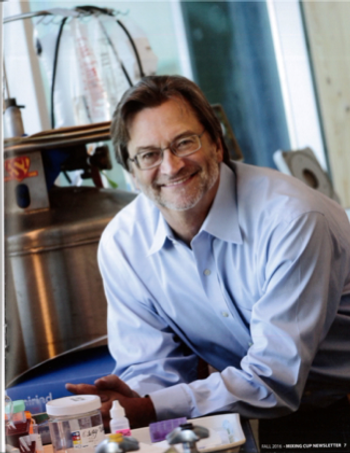
Gerardo Gamez, a Professor and Graduate Advisor at Texas Tech University, provides an overview about what glow discharge optical emission spectroscopy (GDOES) is and why it’s a useful technique for elemental mapping.

The Winter Conference on Plasma Spectrochemistry provides a forum for spectroscopists, academics, industry professionals, and instrument vendors to gather under one roof to discuss the latest trends and advancements in atomic spectroscopy and plasma-based technologies (1). As part of the conference program, numerous researchers are set to deliver talks at the conference that highlights their ongoing research in this space.

Gerardo Gamez, a Professor and Graduate Advisor at Texas Tech University, is one of these researchers. His talk, titled “Characterization of Particles from the Nano to the Micro Scale via Glow Discharge Spectroscopy,” will cover how glow discharge optical emission spectroscopy (GDOES), a technique known for its ability to conduct elemental mapping with nanometer-scale resolution (1,2). Gamez provided an overview of his talk in a previous interview segment (3).

In the second part of our interview with Gamez, he discusses what GDOES is and why it improves on traditional techniques for elemental mapping.


Spectroscopy: What is GDOES and how does it enable faster elemental mapping across large sample areas compared with traditional approaches?

Gerardo Gamez: GDOES is a technique where we can have a solid sample in low vacuum chamber, and we can directly analyze it by sputtering the surface atoms into the glow discharge plasma, right? In the plasma, they get excited, and the resulting light emission has unique spectral features that can be used for elemental identification and quantification. So, a few years ago, we found that the optical emission retain the sample surface and lateral distribution of the elements from the spotted area if we pulsed the glow discharge and also operate at a little bit higher pressure than typical. And so, this is very interesting because we can generate the discharge above a wide area of the sample. And so, when we couple this to hyperspectral imaging (HSI) techniques, we can obtain the full elemental map of the area simultaneously. This can result in several orders of magnitude faster mapping. The other techniques that require basically rastering an ion beam or light beam, pixel by pixel, to collect the full map and that significant sample throughput advantage just allows us to analyze many more samples and expand the experimental parameter space to better understand systems of interest.

This video clip is the second part of our conversation with Gamez. To stay up to date on our coverage of the Winter Conference on Plasma Spectrochemistry, click here.

References

  1. IASA, Winter Conference on Plasma Spectrochemistry. IASA. Available at: https://iasa.world/winter-plasma-conference (accessed 2026-01-06).
  2. Texas Tech University, Dr. Gerardo Gamez. TTU.edu. Available at: https://www.depts.ttu.edu/chemistry/Faculty/gamez/ (accessed 2026-01-06).
  3. Wetzel, W. Previewing a Talk on Glow Discharge Optical Emission Spectroscopy. Spectroscopy. Available at: https://www.spectroscopyonline.com/view/previewing-a-talk-on-glow-discharge-optical-emission-spectroscopy (accessed 2026-01-07).

Newsletter

Get essential updates on the latest spectroscopy technologies, regulatory standards, and best practices—subscribe today to Spectroscopy.