SPEC PerkinElmer 10.13
News|Videos|August 22, 2025

FT-IR Troubleshooting Guide: How to Solve Common Problems in Infrared Spectroscopy

If you’ve ever run an Fourier transform infrared (FT-IR) sample only to have the spectrum look “off,” you’re not alone. Noisy data, strange negative peaks, or distorted baselines are some of the most common frustrations FT-IR users face. The good news is that most of these issues have straightforward explanations—and simple solutions.

This explainer video walks through four of the most common FT-IR problems and how to solve them, drawing from insights first published in Spectroscopy's article, "Common Problems with FT-IR Instruments and How to Avoid Them".

Here’s a quick look at the “case files” covered in the video:

  1. Instrument Vibrations – FTIR spectrometers are highly sensitive. Even small physical disturbances from nearby pumps or lab activity can introduce false spectral features. Keeping your setup vibration-free is key to getting clean data.
  2. Dirty ATR Crystals – Attenuated Total Reflection (ATR) accessories are popular for their ease of use, but a contaminated crystal can cause negative absorbance peaks. A quick clean and fresh background scan usually resolves the issue.
  3. Surface vs. Bulk Effects – With materials like plastics, the surface chemistry may not match the bulk. Collecting spectra from both the surface and a freshly cut interior can reveal if you’re dealing with surface oxidation or additives.
  4. Incorrect Data Processing – In diffuse reflection, processing data in absorbance units can distort spectra. Converting to Kubelka-Munk units provides a more accurate representation for analysis.

By keeping these four checkpoints in mind—instrument stability, accessory cleanliness, sample integrity, and proper data processing—you can troubleshoot most FTIR problems quickly and confidently.

Whether you’re new to spectroscopy or an experienced analyst, building this troubleshooting mindset helps ensure your data is reliable and reproducible.

This video was created using Gamma and NotebookLM.


Related to this article

Sparks near Reno Nevada – Site of 2026 SciX Conference ©   DTM Media  -chronicles-stock.adobe.com
Wednesday's program at SciX 2026 kept returning to one question: can spectroscopy perform outside the controlled laboratory? Speakers took surface-enhanced Raman scattering (SERS), laser-induced breakdown spectroscopy (LIBS), mid-infrared photonics, chemometrics, and fluorescence excitation–emission matrix (EEM) spectroscopy into clinics, food plants, reactor coolant loops, brine fields, and drinking water supplies.
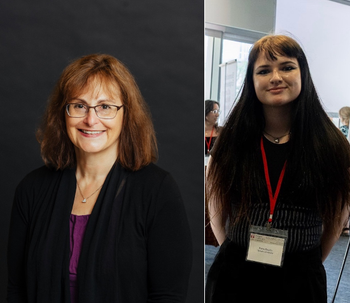
Nancy Pleshko (left) is a Laura H. Carnell Professor Emerita in Temple University's Department of Bioengineering. Petra A. Baylin (right) is a research assistant in the Tissue Imaging and Spectroscopy Lab at Temple University. Photo Credits: © Nancy Pleshko and Petra Baylin
As part of our coverage of the SciX 2026 Conference, Nancy Pleshko and Petra Baylin of Temple University sat down with Spectroscopy to talk about their recent study, explaining how Fourier transform infrared (FT-IR) imaging of ultra-high weight molecular polyethylene (UHMWPE) implants permits oxidation evaluation throughout the sample yielding insight into failure.
NIR Spectroscopy of the Brain and Other Complex Analyses, ©   Navaporn  -chronicles-stock.adobe.com
Near-infrared spectroscopy has quietly stopped being a niche calibration exercise and started acting like an autonomous diagnostic partner, reading consciousness in an injured brain, steering a fermenter without a human hand, and hunting invisible plastic in a glass of water. The tool chemists once used to check moisture in grain is now fusing with artificial intelligence to make decisions no spectrometer could make alone.
FACSS 2026 Award Interviews ©  Erin -chronicles-stock.adobe.com
Eight FACSS award winners at SciX 2026, One LIBS trailblazer. Forty-eight questions. And not one of them is a softball. Award season in spectroscopy usually means polite applause, a plaque, and a photo. We're not completely interested only in the award sessions. The eight scientists honored at SciX 2026 in Sparks, Nevada, along with LIBS researcher Alessandro De Giacomo, are pushing Raman into operating rooms, flying LIBS on drones, reading chemistry off Mars, and tracing toxic metals downwind of industrial sites. Their work makes big claims. In the coming days, Spectroscopy will sit down with eight of these researchers and ask whether those claims hold up. The interviews that follow won't just celebrate. They'll press on the gaps between simulation and experiment, between the lab bench and the clinic, and between a clever paper and an instrument someone will actually buy and use.
Spectral Frontiers: Past the Diffraction Limit (FT-IR Spectroscopy)
Fourier-transform infrared (FT-IR) spectroscopy, long the workhorse of molecular fingerprinting, is being reinvented by photothermal detection schemes and quantum cascade laser (QCL) sources that push spatial resolution and analysis speed far beyond classical dispersive and interferometric limits. New instrumentation such as optical photothermal infrared (O-PTIR) microscopy and laser direct infrared (LDIR) chemical imaging is enabling sub-micron, label-free chemical mapping of biological, environmental, and pharmaceutical samples. This article reviews the latest FT-IR-adjacent technologies, recent patents, and research driving the field, featuring perspectives from the scientists and instrument developers advancing the technique.