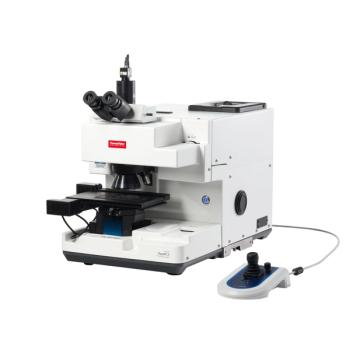
SPEC PerkinElmer 10.13
News|Videos|June 19, 2024

Icons of Spectroscopy: An Interview with Jeanette Grasselli Brown, Part 2

Jeanette Grasselli Brown is undoubtedly an icon of spectroscopy. Brown forged a path for herself, and many other women, at a time when few were able to get ahead in science.

The child of Hungarian immigrants, Grasselli Brown grew up in Cleveland Ohio. She can trace her interest in learning and chemistry all the way back to her childhood. In 1950, Grasselli Brown earned her bachelor’s degree in chemistry from Ohio University. After college, she took a job as a research chemist at BP, formerly Standard Oil, eventually becoming the director of Corporate Research and Analytical Science.

Grasselli Brown's expertise includes vibrational spectroscopy, combined instrumental techniques, computerized spectroscopy, process analysis and control, and environmental spectroscopy. Today, she holds 13 honorary degrees, including an Honorary Doctor of Science degree from Ohio University, her alma mater. The university offers an undergraduate research award in her honor. Grasselli Brown also holds one patent and has published 80 papers and nine books in the field of infrared and Raman spectroscopy. She was the editor of the journal Vibrational Spectroscopy from 1989-1995.

As part of Spectroscopy’s Icons of Spectroscopy Laureate Series, associate editorial director Caroline Hroncich sat down with Jeanette Grasselli Brown to discuss her career in spectroscopy. In the second of this multi-part interview, Grasselli Brown talks about the accomplishments that have made her most proud throughout her decorated career.
Watch the first interview here


Related to this article

FACSS 2026 Award Interviews ©  Erin -chronicles-stock.adobe.com
Eight FACSS award winners at SciX 2026, One LIBS trailblazer. Forty-eight questions. And not one of them is a softball. Award season in spectroscopy usually means polite applause, a plaque, and a photo. We're not completely interested only in the award sessions. The eight scientists honored at SciX 2026 in Sparks, Nevada, along with LIBS researcher Alessandro De Giacomo, are pushing Raman into operating rooms, flying LIBS on drones, reading chemistry off Mars, and tracing toxic metals downwind of industrial sites. Their work makes big claims. In the coming days, Spectroscopy will sit down with eight of these researchers and ask whether those claims hold up. The interviews that follow won't just celebrate. They'll press on the gaps between simulation and experiment, between the lab bench and the clinic, and between a clever paper and an instrument someone will actually buy and use.
Spectral Frontiers: Past the Diffraction Limit (FT-IR Spectroscopy)
Fourier-transform infrared (FT-IR) spectroscopy, long the workhorse of molecular fingerprinting, is being reinvented by photothermal detection schemes and quantum cascade laser (QCL) sources that push spatial resolution and analysis speed far beyond classical dispersive and interferometric limits. New instrumentation such as optical photothermal infrared (O-PTIR) microscopy and laser direct infrared (LDIR) chemical imaging is enabling sub-micron, label-free chemical mapping of biological, environmental, and pharmaceutical samples. This article reviews the latest FT-IR-adjacent technologies, recent patents, and research driving the field, featuring perspectives from the scientists and instrument developers advancing the technique.
Infrared Reimagined: How FT-IR Spectroscopy Learned to Read Molecules, ©  Luis Eduardo  -chronicles-stock.adobe.com
FT-IR spectroscopy, long treated as a mature bench technique for confirming a carbonyl stretch or fingerprinting a polymer, has quietly become one of chemistry’s most versatile discovery engines: it now infers molecular structure straight from a spectrum without a reference library, resolves chemistry tens of nanometers wide, and screens a fingerstick of blood for disease in minutes. The last five years of published research show FT-IR moving from a confirmatory tool into a predictive, autonomous, and field-ready analytical platform.
The Ongoing Decline of Spectroscopy Expertise
In this panel discussion, five SpecAcademy instructors examined why spectroscopy expertise has declined and how SpecAcademy aims to rebuild it through curated, fundamentals-based education suited to increasingly complex analytical work.