The American Academy of Forensic Sciences (AAFS) Annual Scientific
Meeting took place from February 17 to 22, 2025, in Baltimore, Maryland. In this video
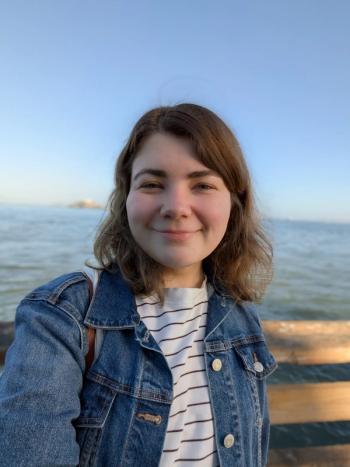
interview, we speak with Tom Metz of the Pacific Northwest National Laboratory, Heidi
Eldridge of George Washington University, and Claire Glynn of the University of New
Haven, all of whom attended AAFS this year and delivered important talks that provide
insight into the state of the forensic science industry. Metz, Eldridge, and Glynn provide
summaries of the talks they delivered at AAFS.
Near-infrared spectroscopy combined with principal components analysis and a back propagation neural network identified Huanglongbing-infected Gannan navel orange leaves with an overall accuracy of 98.75%, outperforming LDA, KNN, and SVM models.
Top articles include an examination of the current trends propelling atomic spectroscopy forward and post-conference coverage of the 2026 SciX show in Sparks, Nevada.
In this Q&A, we recap the October edition of “What’s Nu,” which covered topics such as how novel spectroscopic and analytical methods are transforming environmental monitoring, medical treatment, and accessibility in scientific research.
In this Q&A article, we highlight several prominent researchers being recognized at the 2026 SciX Conference for their significant contributions to spectroscopy and photonics and discuss what these researchers talked about at the conference.
Amy Colleran, a Postdoctoral Researcher in the Centre of Metabolomics Research at the University of Liverpool, is exploring how to detect volatile organic compounds by bubbling them directly into colloidal silver and gold nanoparticles.
The Eastern Analytical Symposium returns to Plainsboro, New Jersey, November 16–18, with a keynote on AI-ready data and a posthumous award honoring solid-state NMR researcher Robert Schurko.
In this segment of our SciX interview with Kevin Wilkinson, a professor of environmental chemistry at the Université de Montréal, discusses extending lead isotope work to greater distances and explains why graduate students need adaptability, critical judgment, and coding skills more than expertise in any single instrument.
Atomic spectroscopy has quietly gone from counting elements in bulk to counting single nanoparticles, imaging tissue at the micrometer scale, and reading Martian rocks from several meters away. The instruments got smaller, the software got smarter, and the questions they can now answer got a lot more interesting.