Improving High-Resolution Mass Spectrometry Platforms
In the first part of our interview with Ken Marcus of Clemson University, he discusses what he enjoys about the Winter Conference on Plasma Spectrochemistry. Marcus also dives into his research and how the instrumentation his group uses allows for better separation of isobars without the need for chemical intervention, enhancing the accuracy of mass spectrometry (MS) readings.
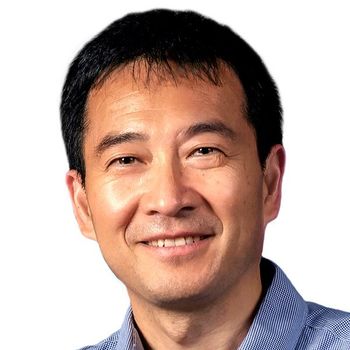
At the Winter Conference on Plasma Spectrochemistry, which took place in Tucson, Arizona, Spectroscopy sat down with Ken Marcus, a Robert Adger Bowen Professor of Chemistry at Clemson University, to talk about his research (1–2).
Marcus is an internationally recognized analytical chemist with a distinguished career spanning education, research, and mentorship. He earned dual BS degrees in chemistry and physics from Longwood College in 1982, followed by a PhD in analytical chemistry from the University of Virginia in 1986 (2). Over nearly four decades on the Clemson University faculty, he has supervised the graduation of 44 PhD and 17 MS students and has served on the editorial advisory boards of three international journals (2). His scientific achievements have been widely honored, including the South Carolina Governor’s Award for Excellence in Science Research (2001), Fellowships in the Royal Society of Chemistry (2010), the American Association for the Advancement of Science (2012), the Society for Applied Spectroscopy (2016), and the National Academy of Inventors (2018) (2). In 2019, he received Clemson University’s inaugural Researcher of the Year award.
Marcus’ research centers on the development of advanced plasma-based techniques for atomic spectroscopic analysis. His group has designed atomic emission and mass spectrometry (MS) instrumentation based on glow discharge sources, several of which have been commercialized. A major current focus is the liquid sampling–atmospheric pressure glow discharge (LS-APGD) microplasma, developed as a compact spectrochemical source for optical emission and MS, with applications in nuclear nonproliferation and safeguards (2). This work is supported by the NNSA through Oak Ridge National Laboratory.

In parallel, Marcus has made substantial contributions to liquid chromatography (LC), particularly through the development of capillary-channeled polymer fiber stationary phases. These versatile, low-cost materials enable high-efficiency separations of proteins, exosomes, and virus particles and can be chemically modified to enhance selectivity. Supported by National Science Foundation (NSF) and Advanced Mammalian Biomanufacturing Innovation Center (AMBIC) funding, his recent work integrates microplasma ionization and fiber-based chromatography to study metal speciation in biomanufacturing systems.
In the first part of our interview with Marcus, he discusses what he enjoys about the Winter Conference on Plasma Spectrochemistry. Marcus also dives into his research and how the instrumentation his group uses allows for better separation of isobars without the need for chemical intervention, enhancing the accuracy of mass spectrometry (MS) readings.
This video clip is the first part of our conversation with Marcus. To stay up to date on our coverage of the Winter Conference, click
References
- IASA, Winter Conference on Plasma Spectrochemistry. IASA. Available at:
https://iasa.world/winter-plasma-conference (accessed 2026-01-19). - Clemson University, R. Kenneth Marcus. Clemson.edu. Available at:
https://www.clemson.edu/science/academics/departments/chemistry/about/profiles/marcusr (accessed 2026-01-19).
Newsletter
Get essential updates on the latest spectroscopy technologies, regulatory standards, and best practices—subscribe today to Spectroscopy.