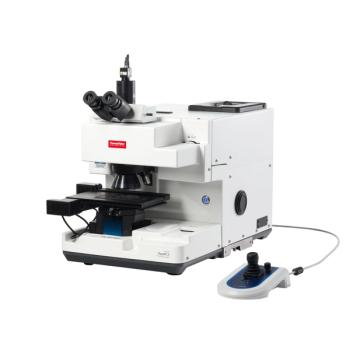
The modular system is intended to help laboratories analyzing microplastics, pharmaceutical formulations, forensic evidence, and other microscopic samples.
Ji-Xin Cheng of Boston University is the winner of the 2020 Pittsburgh Spectroscopy Award, which is presented by the Spectroscopy Society of Pittsburgh, a co-founder of the Pittcon conference. Established in 1957, the award honors an individual who has made outstanding contributions in the field of spectroscopy.
Ji-Xin Cheng of Boston University is the winner of the 2020 Pittsburgh Spectroscopy Award, which is presented by the Spectroscopy Society of Pittsburgh, a co-founder of the Pittcon conference. Established in 1957, the award honors an individual who has made outstanding contributions in the field of spectroscopy.
Cheng attended the University of Science and Technology of China (USTC) from 1982 to 1994. Following that, he worked toward his PhD, studying bond-selective chemistry at USTC. As a graduate student, he worked as a research assistant at Paris-Sud University (France) on vibrational spectroscopy, and at the Hong Kong University of Science and Technology (HKUST) on quantum dynamics theory. After postdoctoral training on ultrafast spectroscopy at HKUST, he joined Sunney Xie’s group at Harvard University as a postdoctoral research, where he spearheaded the development of coherent anti-Stokes Raman spectroscopy (CARS) microscopy that allows high-speed vibrational imaging of cells and tissues.
Cheng was an assistant professor at in the Weldon School of Biomedical Engineering and Department of Chemistry at Purdue University from 2003 to 2009, when he was promoted to associate professor. In 2013, he was promoted to the position of full professor. He joined Boston University as the Inaugural Moustakas Chair Professor in Photonics and Optoelectronics in 2017.
In addition to this award, Cheng has received the 2019 Ellis R. Lippincott Award, which is presented jointly by the Optical Society (OSA), the Society for Applied Spectroscopy, and the Coblentz Society, as well as the 2015 Craver Award from the Coblentz Society. Cheng has authored more than 240 peer-reviewed articles with an h-index of 75 (Google Scholar). His research has been supported by more than 25 million dollars in funding from federal agencies including the National Institutes of Health (NIH), the National Science Foundation (NSF), the U.S. Department of Defense (DoD), the U.S. Department of Energy (DoE) and private foundations including the Keck Foundation. In 2014 He co-founded Vibronix Inc., whose mission is to save lives through medical device innovations. Cheng is also a Fellow of OSA and a Fellow of American Institute of Medicine and Biological Engineering.