

News|Articles|July 27, 2026
Measuring the Electronic State of Individual Metal Atoms
Author(s)Will Wetzel, Spectroscopy Staff
Listen
0:00 / 0:00
Key Takeaways
- Neal Mankad’s ACS Fall 2026 talk will be held Monday, August 24 at 12:10 pm EDT, focusing on spatially resolved electronic structure in molecular copper clusters.
- Conventional XAS averages oxidation states across all metal sites, whereas DAFS provides site-resolved oxidation-state surrogates by tracking energy-dependent anomalous scattering at each copper site.
A talk at the upcoming American Chemical Society (ACS) Fall 2026 Meeting will present a new method for measuring the electronic state of individual atoms within multinuclear clusters.
Advertisement
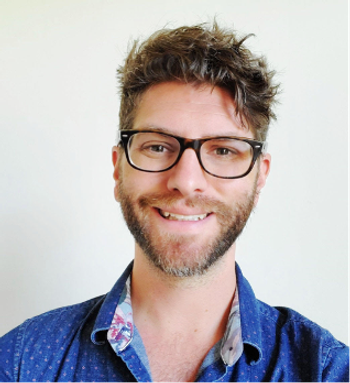
At the upcoming American Chemical Society (ACS) Fall 2026 Meeting, there will be a talk on structural chemistry that spectroscopists might find insightful. On Monday August 24th at 12:10 pm EDT, Neal Mankad, who is a professor at the University of Illinois – Chicago, will deliver a talk titled, “Spatial Mapping of Electronic Structure in Molecular Copper Clusters Using Resonant X-ray Diffraction.”1 In his presentation, Mankad will present a technique that can measure the electronic state of individual metal atoms within multinuclear clusters, addressing a longstanding gap in structural chemistry.1
What will the presentation cover?
In his presentation, Mankad will talk about the latest research his laboratory is conducting on structural chemistry. His presentation will describe how his group has applied diffraction anomalous fine structure (DAFS) to a series of molecular copper clusters ranging from two to eight metal centers.1 Mankad will review how the method his team developed solves a problem that has limited researchers' understanding of metal clusters for decades: conventional X-ray absorption spectroscopy (XAS), the standard tool for determining a metal's oxidation state, can only report an average value across all metal sites in a cluster, obscuring how electronic character is actually distributed among individual atoms.1
To understand why this talk is significant, it’s important to know how DAFS works. DAFS pairs single-crystal
Mankad's presentation will cover benchmarking work on simpler di-, tri-, and tetranuclear copper clusters. The goal of the talk is to establish that DAFS results align with expectations from known structures.1 The talk will then turn to more complex hexa-, hepta-, and octanuclear copper hydride clusters, where site-specific oxidation-state data have not previously been available.1
The clusters that Mankad’s group studied serve as molecular models for copper nanomaterials, which are used in catalysis, electronics, and energy applications. Because bulk nanomaterials are difficult to characterize atom-by-atom, well-defined molecular clusters offer a route to test fundamental principles of electronic structure that can then inform understanding of larger, less tractable systems.1
For chemists working on cluster synthesis, catalysis, or
What is the American Chemical Society Fall 2026 Meeting?
The meeting typically features several events for attendees. These events include oral and poster presentations, plenary lectures, technical symposia, professional development workshops, career fairs and networking events, and an exposition where companies showcase their latest instruments and products.2
Why is this meeting important for spectroscopists?
For the spectroscopy community, the ACS Fall Meeting is an important venue for learning about advances in techniques such as Raman spectroscopy, infrared (IR) spectroscopy, nuclear magnetic resonance (NMR), mass spectrometry (MS), laser-induced breakdown spectroscopy (LIBS), X-ray methods, chemometrics, hyperspectral imaging (HSI), and other analytical technologies.1,2
For more information about the upcoming conference, you can visit the ACS website.
References
- Mankad, N. Spatial Mapping of Electronic Structure in Molecular Copper Clusters Using Resonant X-ray Diffraction. Presented at the American Chemical Society Fall 2026 Meeting, Chicago, Illinois, August 24, 2026. Available at:
https://acs.digitellinc.com/live/37/page/1374?search=spectroscopy&tags=475&page=55&window-jn2mj2&window-w33qsi&window-svv07a - Wetzel, W. Why Spectroscopists Should Attend the ACS Fall 2026 Conference. Spectroscopy Online, 2026.
https://www.spectroscopyonline.com/view/why-spectroscopists-should-attend-the-acs-fall-2026-conference (accessed July 14, 2026).
Advertisement
Related Content
Advertisement



Advertisement
Advertisement