Terephthalic acid (TPA) and purified terephthalic acid (PTA) are precursors in the making of polyester PET for polyester films, bottle resin, textile fabrics, and specialty chemicals. During production and use of TPA and PTA, the catalysts Co, Br and Mn must be closely monitored to ensure optimum product quality. Rigaku EDXRF Application Note #1539 describes the analysis of concentrations of Co, Br and Mn in TPA and PTA solutions and highlights the performance of the Rigaku NEX OL on-line EDXRF process analyzer.
The following articles are the most accessed digital object identifier (DOI) manuscripts for Spectroscopy and LCGC International during the month of October 2026. Nine articles are individually ranked here by DOI page views; the seventh-highest entry (99 views) was recorded against the bare LCGC North America journal-level DOI rather than an individual article and is therefore not attributable to a single manuscript.
In 2026, spectroscopy stopped behaving like a bench measurement and started acting like an intelligent, portable, and increasingly personal information system. Here is what Spectroscopy readers could not stop reading this year, and why 2027 may be the year these ideas leave the laboratory for good.
The updated and expanded 2026 edition of Spectroscopy's Instrument Components Terminology Guide defines the sources, detectors, optical and dispersive elements, sampling hardware, physical constants, and unit conversions used across UV-vis, NIR, IR, Raman, X-ray, and atomic spectroscopic instrumentation, with new terms reflecting component developments reported between 2022 and 2026.
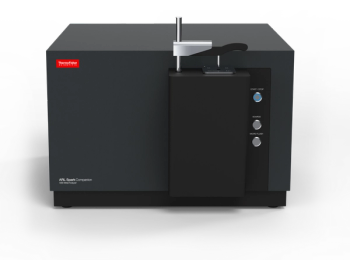
According to Thermo Fisher, the ARL Spark Companion pairs a multi-optics complementary metal-oxide-semiconductor (CMOS) detector with a compact spark source, aiming to move alloy verification out of external laboratories and closer to production.
Spectroscopy's editors gather 143 evergreen articles from 2026, including tutorials, terminology guides, technique reviews, application surveys, peer-reviewed research and the magazine's long-running columns, and organize them by subject so readers can build lasting knowledge one topic at a time.
X-ray analytical techniques, spanning X-ray fluorescence (XRF), X-ray diffraction (XRD), and X-ray photoelectron spectroscopy (XPS), are becoming faster, more portable, and more energy-efficient, with microbeam XRF spot sizes once exclusive to synchrotrons now available on laboratory benchtops.
Top articles include the publication of a new terminology guide focused on data processing, machine learning, artificial intelligence (AI), and chemometrics.
Laser-induced breakdown spectroscopy (LIBS) is being used in numerous application areas, including environmental monitoring, cultural heritage, and space exploration.