Teledyne Leeman Labs QuickTrace® M7600 was used to analyze and determine total elemental mercury (Hg0) concentration in Tuna (CRM 463) following the guidance in USDA Method CLG-MERC1.01 and the operating conditions.
Laser-induced breakdown spectroscopy (LIBS) is being used in numerous application areas, including environmental monitoring, cultural heritage, and space exploration.
The 2026 first edition of Spectroscopy's Chemometrics, Data Processing, Machine Learning, and Artificial Intelligence Terminology Guide defines the classical chemometric, statistical, machine learning, AI, and process analytical technology (PAT) terms most likely to be encountered by working spectroscopists, analytical chemists, and process engineers.
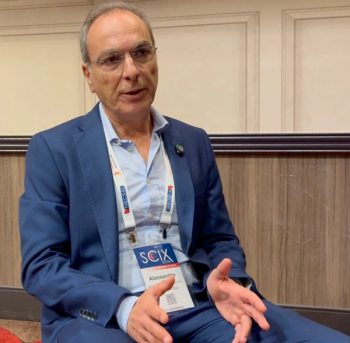
In an interview at SciX, Alessandro De Giacomo discusses nanoparticles as signal enhancers and medical tags, a self-calibrating drone LIBS system, open questions in laser–matter interaction, and why students need a strong foundation in fundamentals.
Top articles include an examination of the current trends propelling atomic spectroscopy forward and post-conference coverage of the 2026 SciX show in Sparks, Nevada.
Atomic spectroscopy has quietly gone from counting elements in bulk to counting single nanoparticles, imaging tissue at the micrometer scale, and reading Martian rocks from several meters away. The instruments got smaller, the software got smarter, and the questions they can now answer got a lot more interesting.
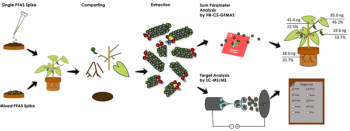
This Atomic Perspectives column explains how high-resolution continuum source graphite furnace molecular absorption spectrometry (HR-CS-GFMAS) quantifies extractable organic fluorine (EOF) as a PFAS sum parameter, complementing LC-MS/MS target analysis, with applications to German river sediments, bean plants, and fluorinated polymer sealing materials.